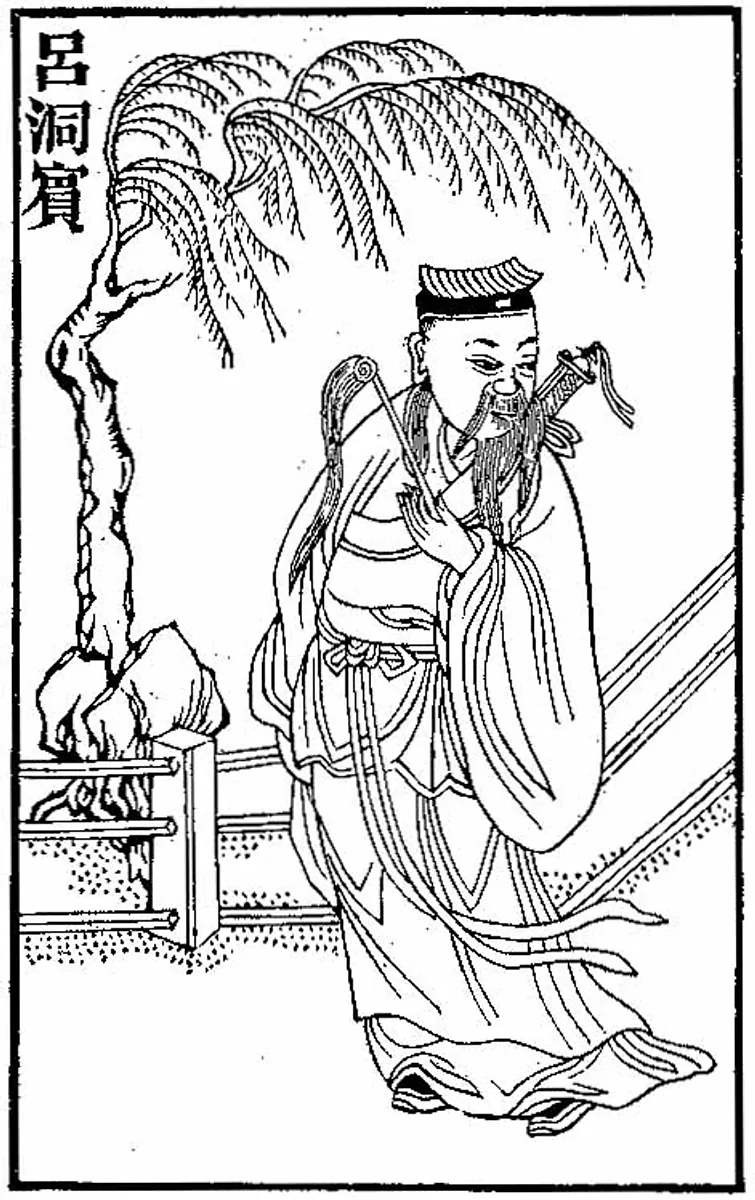
Of all the texts in this archive's background, one has a reach out of proportion to its standing in China. Taiyi jinhua zongzhi (太乙金華宗旨), "The Teaching of the Golden Flower of the Great One", is a modest meditation manual from the late seventeenth century. In 1929 a German translation with a commentary by Carl Jung turned it into the book through which most of the Western world first met Taoist internal alchemy — and the book whose assumptions most Western readers of Mo Pai still carry, often without knowing it.
Where it came from
It was not written in the ordinary sense. It was received. In 1668, at a private altar in Piling, in Jiangsu, a group of seven disciples practising spirit-writing — a planchette or stylus moving in a tray of sand, read as the words of a deity — began receiving teachings from Lü Dongbin, the Tang-dynasty immortal who is the patron of a great deal of later internal alchemy. A second round of revelations came in 1692 to another circle, whose leader compiled and revised the material; many of the prefaces carry that date. The best account of all this is Monica Esposito's, and her dates are the ones used here.
Spirit-writing is worth pausing on, because it is not marginal. It was one of the main ways new Taoist scripture was produced in late imperial China, and Lü Dongbin was among its most prolific authors. A modern reader who finds the method strange should know that its contemporaries found it entirely normal — and that the text's authority, for its first readers, came from that source and not from antiquity.
Many versions
The text survives in several editions that do not agree. The oldest known, in thirteen chapters, was printed in a collection of Lü Dongbin's works in 1775. Others followed in 1803 and 1852. In 1831 the Longmen master Min Yide published a version claiming to rest on a manuscript in Lü's own hand handed down within the Dragon Gate lineage since 1688; Esposito judges that claim inconsistent with the text itself and largely polemical. A practitioner who wants to know which is the "real" Golden Flower is asking a question the textual history does not support.
What it teaches
The core instruction is called huiguang (回光), "turning the light around". The practitioner sits, lets the breath settle, and turns the attention that normally runs outward through the eyes back inward, to a point between and behind them. Kept up, the light is said to crystallise; the "golden flower" is the image for what blooms when it does. The vocabulary of neidan — the lower field, the circulation, the fusion of opposites, the embryo — is all present, but the text is unusually quiet about the body and unusually insistent about the mind. It is closer to a manual of attention than to a manual of energy.
Wilhelm and Jung
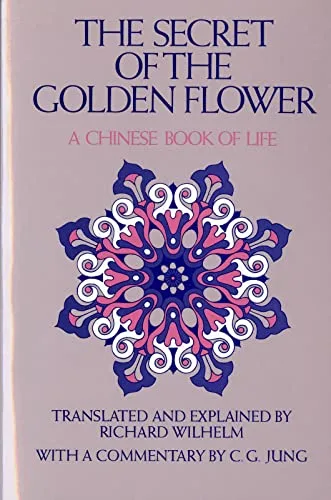
Richard Wilhelm, a German missionary turned sinologist, translated the first eight of its thirteen chapters from a 1921 Beijing edition, which had been printed together with a Buddhist-tinged text by Liu Huayang, the Huiming jing. He sent the manuscript to Carl Jung in 1928. Jung later described the moment in his memoir: "I devoured the manuscript at once, for the text gave me undreamed-of confirmation of my ideas about the mandala and the circumambulation of the center. That was the first event which broke through my isolation."
They published it together in 1929 as Das Geheimnis der goldenen Blüte; Cary F. Baynes's English translation followed in 1931. Jung's commentary read the text as a map of the psyche — the light as consciousness, the golden flower as the self — and his encounter with it led directly into his long study of European alchemy. For two generations the Wilhelm–Jung edition was simply what the Golden Flower was in the West.
Cleary’s objection
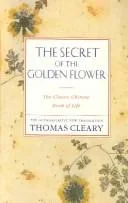
In 1991 Thomas Cleary published a complete translation from Chinese and attacked the earlier one directly. He called Wilhelm's version incomplete, based on a corrupted text, and full of "dangerous and misleading contaminations", and argued that Wilhelm's renderings had steered Jung toward a psychological reading the text does not support. Cleary's own edition has been criticised in turn for not saying which Chinese text it follows. The argument has never been settled, and the Wilhelm–Jung book remains in print beside its critic.