The case against external alchemy was not made by its critics. It was made by its customers. For about two centuries, from the middle of the seventh century to the middle of the ninth, the rulers of the most powerful state in the world kept taking elixirs, and a striking number of them died in ways their own courts attributed to the medicine.
The count
The classic tally is by the Qing historian Zhao Yi (1727–1814), in his notes on the twenty-two dynastic histories. Under the heading "Many Tang emperors took elixirs" he works through the record ruler by ruler and concludes: "In all, six Tang rulers took elixirs." Modern historians usually say five died of them. The difference is in the details, and the details are worth having.
| Emperor | Died | What the record says | How sure |
|---|---|---|---|
| Taizong | 649 | Took a drug prepared by an Indian practitioner at court; a later minister says it brought on a sudden, fatal illness. | Possible |
| Xianzong | 820 | Took elixirs from the alchemist Liu Mi, became violently irritable, and was killed by eunuchs. | Indirect |
| Muzong | 824 | Kept taking mineral drugs, in Zhao Yi’s words "knowing the danger and walking into it anyway". | Possible |
| Jingzong | 827 | Took elixirs, but was assassinated; Zhao Yi does not blame the drugs. | No |
| Wuzong | 846 | Harmed by elixirs; unable to speak for some ten days before he died. | Strong |
| Xuanzong | 859 | Died of an abscess on the back after taking a longevity drug. | Strong |
Gaozong, between Taizong and Xianzong, was about to take an elixir from another foreign practitioner and was talked out of it by a minister who reminded him what had happened to his father. Seven centuries later the Ming Jiajing emperor, who kept Taoist alchemists at court for decades and took preparations containing red lead and arsenic, is often added to the list; his elixirs may well have shortened his life, but the case is weaker than the Tang ones.
Not only emperors
The most vivid testimony comes from below the throne. In 823 the writer Han Yu composed an epitaph for a young relative by marriage, Li Yu, who had learned drug methods from the same Liu Mi who supplied Xianzong. Li took them, began passing blood, wasted for four years and died at forty-eight. Han Yu then does something epitaphs do not usually do: he lists seven men he had known personally — a minister of works, a censor, a minister of justice and his brother, two regional governors, a general of the guard — who had all been ruined by the same kind of medicine.
What was in the cup
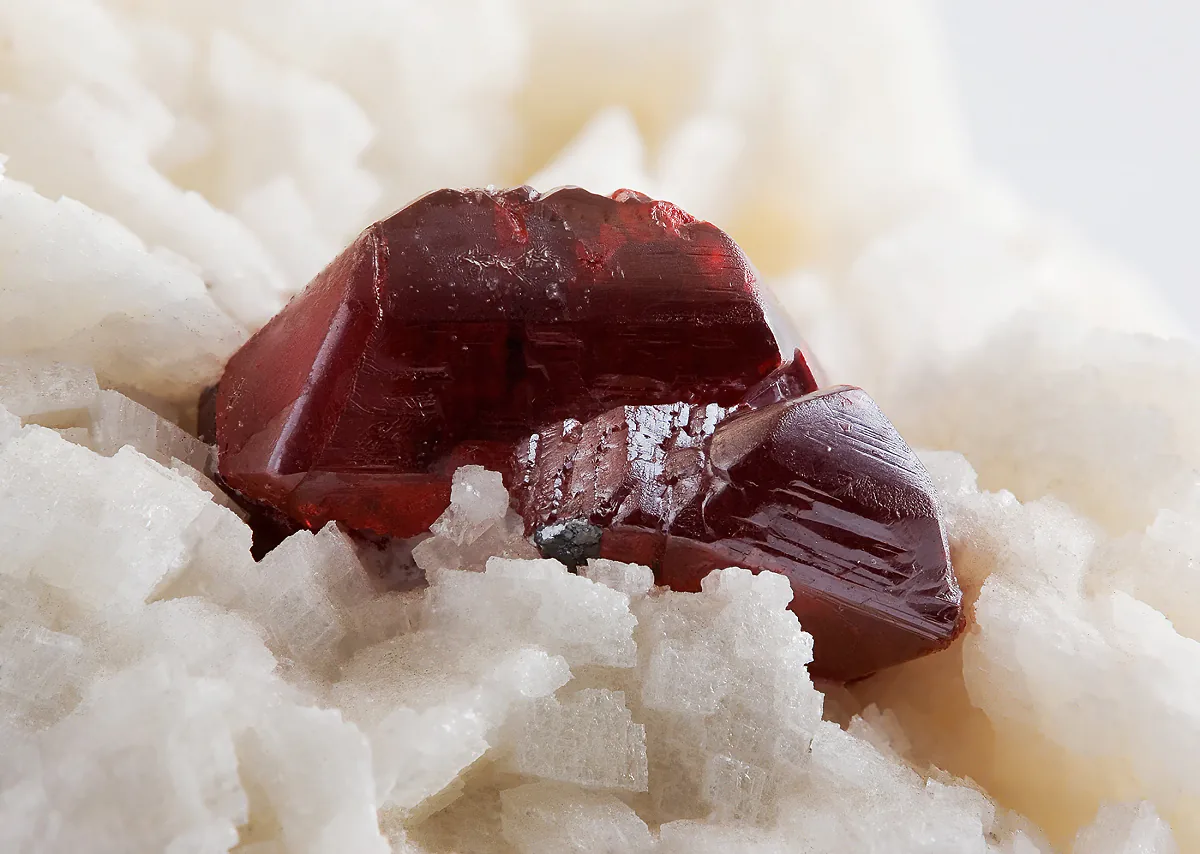
The ingredients were the ones the recipes name: mercury, usually from cinnabar; lead; arsenic in the form of realgar or orpiment; sulphur. Joseph Needham and his collaborators, who examined the cases in detail, read the recorded symptoms as heavy-metal poisoning — itching and crawling sensations of the skin, swelling and weakness of the limbs, later boils and ulcers, nausea and headache, and, with mercury in particular, irritability and loss of self-control. The Tang history's description of Wuzong as "very irritable, losing all normal self-control in joy or anger" fits.
Needham added an uncomfortable point. The early effects of small doses could feel like success: a sense of exhilaration, weight loss, a heightened sex drive. The poison announced itself as the elixir working. A practitioner who felt better in the first months had every reason to increase the dose.
How the tradition explained its dead
It had answers, and they were good ones from inside the system. A death after an elixir could be read as liberation from the corpse — the adept had shed the body like a cicada's shell, and the corpse left behind was a husk. Unpleasant early symptoms could be read as the elixir driving out impurities. Failure could always be blamed on an impure preparation, the wrong timing, a faulty teacher, or the practitioner's own moral state. None of these explanations could be refuted by another death.
That pattern — a strong theory, real harm, and an interpretive system able to absorb any amount of harm without changing — is the most important thing this episode has to teach. It is also one of the forces historians credit with the shift toward internal alchemy, which kept every word of the old vocabulary and stopped asking anyone to swallow mercury.