Zou huo ru mo
走火入魔 — "fire runs wild, the demon enters" — is the classical Chinese term for internal practice going wrong. It appears throughout the neidan and martial literature, it long predates any Western involvement, and traditions that are otherwise wildly enthusiastic about their methods treat it with genuine seriousness.
The described syndrome: heat or pressure rising into the head and failing to descend; insomnia; anxiety and agitation; headaches; palpitations; sensory disturbance; emotional volatility; in severe traditional descriptions, prolonged psychological disturbance. The traditional causes are forcing progress, practising a stage before its foundation is complete, practising in an agitated emotional state, and practising without supervision.
Whether one accepts the energetic explanation or not, the phenomenology is real and has a modern literature. Intensive meditation practice can precipitate adverse psychological effects including anxiety, depersonalisation, dissociation, and in rare cases psychotic episodes, particularly in long retreats, in people with existing vulnerability, and in practices emphasising force and duration. This is documented in the contemplative-science literature and is not controversial.
Specific hazards of what this site documents
- Prolonged breath retention: hypoxia, hypercapnia, syncope, and — critically — real danger in or near water, or while driving. Do not practise retention in a bath, a pool, or a vehicle.
- Breath held against downward abdominal pressure: this is a Valsalva manoeuvre, and at the later levels it is repeated for hours. It spikes and then drops blood pressure, and is associated with fainting, arrhythmia, hernia, and worse in anyone with undiagnosed cardiac disease.
- Hours of immobile cross-legged sitting: peroneal and sciatic nerve compression, ischaemia, joint and lumbar injury. Numbness that persists after standing is a warning, not a milestone.
- Sustained pelvic-floor contraction: pelvic floor dysfunction is a real and undertreated condition, and chronic over-contraction is one of its causes. Recruiting the buttocks and abdominal wall instead of the floor itself adds lumbar loading to it.
- Endocrine and urogenital effects: the practice concentrates on the region the tradition calls the kidneys — which in its own model takes in the adrenals and the gonads — and the reported pattern is exhaustion, cold intolerance, urinary frequency, prostatic congestion and involuntary emission. These are clinical presentations with clinical causes, and they warrant a doctor rather than an energetic reading.
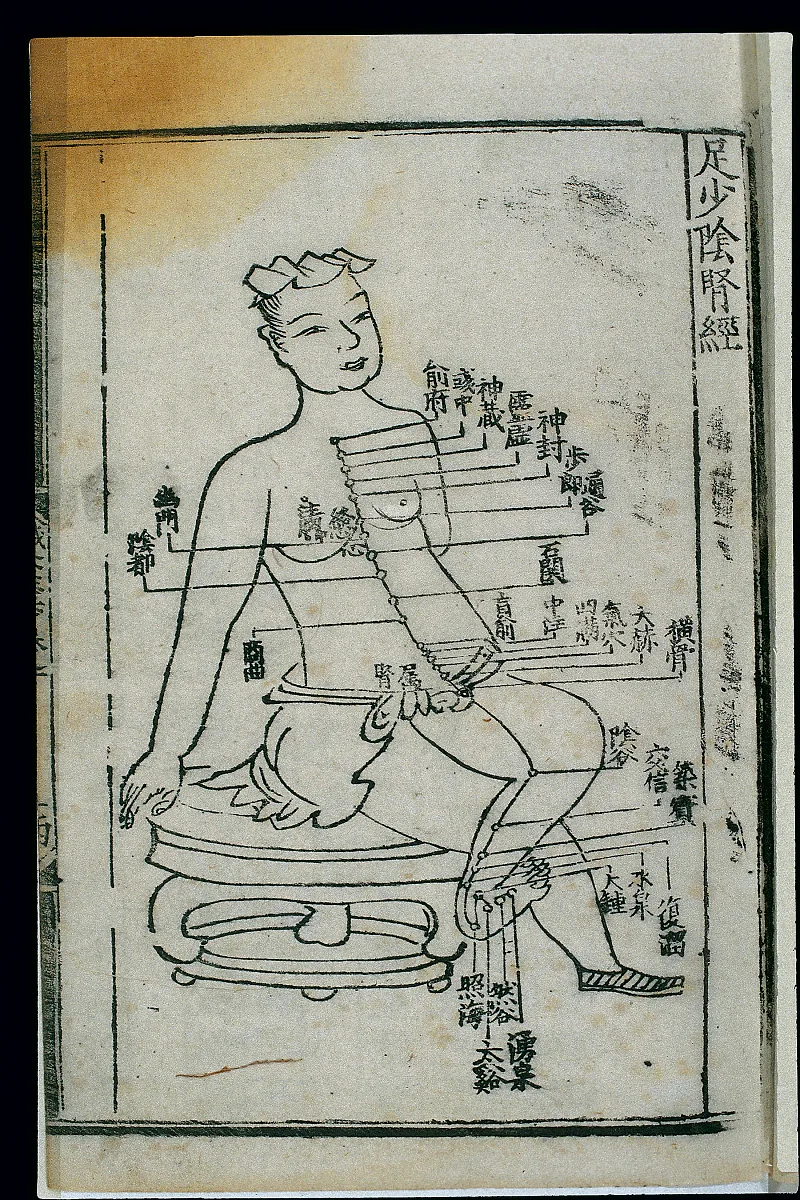
- Forcing energy up the spine: this is the specific practice the classical literature associates most strongly with deviation.
- Psychological risk: sustained isolated intensive practice without a teacher, community, or feedback is the highest-risk configuration in the contemplative literature, and it is exactly the configuration unsupervised practice produces at scale.
- The obsession risk: level-counting, self-diagnosis, and the pursuit of confirmation are the characteristic pathology of this particular community, and the archives contain a great deal of visible distress.
The seventy-two hour rule
The tradition attaches one hard prohibition to the continence requirement, and it is stated more sharply than anything else in the method: after any orgasm or ejaculation — deliberate or otherwise, awake or in sleep — training stops for a full seventy-two hours. Not reduced, not gentled. Stopped. The claim is that sitting inside that window tears the lower dan tien, and that a torn container cannot be filled, so the damage is permanent and the practice is over. The practice page sets out how the rule sits alongside the conservation requirement it belongs to.
The sources qualify when it bites. The danger is tied to focused concentration on the lower field in the borderline state, so a practitioner who has not yet reached that depth is generally told the question does not arise for them — the rule matters from the point at which the sitting starts doing what it is meant to do. That qualification is worth knowing, because in practice the rule is more often applied by anxious beginners to sessions that could not have been dangerous under the tradition's own account.
The trap in it is structural, and this archive would rather state it than leave a practitioner to discover it. A marked rise in sexual energy is one of the ordinary reported signs of the first level, and the same overheating that produces it also produces involuntary emission in sleep. So the rule can cost weeks with no lapse of will involved at all, and the resulting cycle — accumulate, lose it in the night, stand down three days, begin again — is one of the more reliable sources of self-recrimination in the online communities. If you are keeping the rule, keep it as a scheduling constraint rather than as a moral scoreboard.
The other half of "zou huo ru mo"
The term this page opens with is usually translated as though it were one idea about the mind. It is two, and the archive has until now carried only the first: zou huo, the fire running wild, and ru mo — the demon enters. In the literature the phrase comes from, the second half is not a figure of speech. The mo is an interfering being, and the texts treat its arrival as a normal consequence of getting somewhere rather than as a rare misfortune. That deserves stating whether or not a reader believes it, because it is what the tradition says, and because the instructions attached to it are given as instructions.
The doctrine has a name — mo kao, testing by demons — and its logic is that obstruction arrives in proportion to progress. Understanding Reality, one of the classical texts this archive draws its reconstructed levels from, puts it as a conditional in the same form as the rest of this page: cultivate no hidden virtue, and there are apt to be demons to cause obstruction. The remedy it gives is not technical. It is de — accumulated conduct — which is why the ethical material in this tradition sits where a safety warning would sit in another one, and why Ethics, Access, and Yuanfen is not a digression from the method.
The modern nei kung writing that treats this at length is specific about the mechanism, and consistent in it. The claim is that these beings feed on qi; that a practitioner accumulating a great deal of it becomes worth attending to; and that the ones named most often — yaomo and huli jing — take it by attachment rather than by anything dramatic, so what a practitioner notices is depletion, disturbed sleep and a practice that stops going anywhere, not an encounter. The practical instruction that follows is uniform across the sources and old enough to be quoted from the Analects: respect them, and keep your distance. Do not seek contact, do not experiment, and do not attempt protective work you have not been taught.
Where the archive has to be careful is the attribution. The classical statement is genuinely classical, and cited above. The detailed modern treatment — which kinds, what they want, what to do — comes from a teacher of a different school, and is marked as his wherever this archive uses it. The Mo Pai instruction sheets in circulation say nothing on the subject at all. What can be said without qualification is that the tradition this method belongs to has never regarded the spirit world as optional furniture, that its own name for practice going wrong has a demon in it, and that a practitioner who meets something they did not expect should know the tradition expected it.
What the level one instructions forbid, in their own terms
The rest of this page is the archive's account of the risks. This section is not. It is the set of prohibitions the level one instruction sheet states itself — the document that circulates as Jim McMillan's transmission of what he was given, and the closest thing to a primary instruction text in open circulation. Each is given in the form the sheet gives it: do this, and this follows. Where the sheet asserts a consequence, the consequence is reported as the sheet's claim rather than as an established fact, but the instruction is not softened, because a reader deciding whether to sit is entitled to the rule as it was written.
- Train inside the seventy-two hours after an emission, and the sheet says you tear the lower dan tien — and that a torn container cannot be filled, which it treats as the end of the practice rather than a setback. It states plainly that this applies to emission in sleep as well as deliberate release. This is the rule set out in full above.
- Sit on man-made material, and the sheet says the earth half of the supply is cut off. Its instruction is to sit on the ground — bare earth or cement, both allowed, nothing synthetic between the body and it. Where that is impossible it gives a substitute rather than a dispensation: a metal plate under the seat, wired to a water pipe or to a stake driven into the ground outside.
- Hold the breath at any point, and you are outside the method. The sheet's instruction is flat — do not hold the breath, at any stage of the cycle. The slowing it describes, down to eight breaths a minute and lower, is meant to arrive by itself as the sitting deepens, not to be produced by retention.
- Let the shoulders move, and what you gather stays high. Only the abdomen moves. The sheet gives the reason as a mechanism rather than as a matter of form: breathing carried into the chest leaves the newly cultivated qi in the upper body, where it is not wanted and will not reach the lower field. It suggests having somebody watch you, because this is difficult to judge from inside.
- Start too fast, and the sheet says you will quit early and never get there. Its prescription is five minutes, then ten, adding a minute at a time only when the body asks for it — an hour a day reached over about two years. Its own comparison is to loading a bench press you have not built up to: the likely result is torn tendons and muscles, and being forced to stop.
- Take up reverse breathing early, and you are doing level one's second phase before its first. The sheet holds the change back until after about two months of daily practice, and then makes it conditional: only if it can be done comfortably while still holding concentration. It says outright that the reversal will impair the length of the breath at first.
Two things are worth saying about that list. The first is that only one of the six is a warning of physical harm in the ordinary sense — the seventy-two hour rule. The others are failure conditions: do this and the practice does not work, or does not continue. The sheet is far more concerned with the practice being wasted than with the practitioner being hurt, which is a notable silence given what practitioners have actually reported, and the reason the rest of this page exists.
The second is a caution about sources. Documents about Mo Pai safety circulate that are not from this lineage — the most detailed of them, on why practitioners fall ill, is by a teacher of a different school offering his own corrective training. Some of what he describes matches what practitioners report, and where this archive uses that material it says whose it is. It is not the level one instructions, and it should not be read as though John Chang had said it.
Cautions the circulating sheets leave out
The prohibitions below are carried in the lineage's own transmission and are missing from the documents most unsupervised practice is built on. Where the two conflict, this archive treats the sheet as the corrupted copy. That is not deference; it is what the documents are. The level one sheet is an anonymous retyping of an oral teaching, passed through forums for two decades with no custody and no correction, and a document like that loses exactly the material that is hardest to write down and easiest to drop — the negatives, the things a teacher says once while watching you do it wrong. A photocopy that has lost a warning still reads as complete. That is the failure mode of the whole genre, and it is why the archive does not treat silence in the sheets as evidence of anything.
- Do not try to move chi from your lungs down to your lower dan tien. This will lead to health problems. The circulating sheet tells a beginner to imagine the breath travelling down into the dan tien on the inhalation, and treats that image as the whole of what directs the work. On this point the sheet is wrong, and the error is not a small one. The attention rests in the lower dan tien; nothing is moved into it from the chest.
- Do not try to force your breathing to be slower. It will slow down naturally, so you do not need to force anything. The rates given in the sheets — eight breaths a minute, then six, then four — describe what happens as the sitting deepens. They are not a target. A practitioner counting themselves down to a number has turned a report into an instruction, and is holding a breath the body has not arrived at.
- Do not sit ungrounded, and never improvise an earth from a mains socket. The grounding requirement is a matter of health, not only of whether the practice works. The electrical half of that this archive states without qualification: the earth pin of a domestic outlet is not a substitute for the ground, wiring yourself into household mains can kill you, and the substitutes given in the tradition are a plate wired to a water pipe or to a stake driven into the earth outside.
- Do not practise during a thunderstorm. Given plainly. It is also, read simply as advice about sitting on wet ground with a wire running to an earth stake, the least controversial sentence on this page.
- Do not run this alongside other practices, and the microcosmic orbit least of all. Serious mental and physical harm is what is reported to follow. The account below — that the fault was sequence, and doing the system's own next step early — is the version the published books support, and it is kept because it is what those books say. The prohibition is the same in both, and it is not conditional.
- Observe the seventy-two hour rule. Set out in full above; it is stated in the sheets as well, and it is the one hard prohibition the written and the taught versions agree on word for word.
Do not mix methods
The other rule the accounts state with real force is that Mo Pai is not to be run alongside anything else. The cautionary case is Jim McMillan's. Having been given his level one training, he was left without his teacher for an extended stretch while Chang was on retreat; during that time he read about the microcosmic orbit and took it up on his own. When the two met again, Chang's reaction was anger rather than correction: mixing that work into level one had, on his assessment, undone what had been built, and McMillan was sent back to the beginning.
Whatever one makes of the mechanism, the practical recommendation follows and this archive repeats it: if you take up this method, leave other energy-body and chakra systems alone while you are doing it. The detail worth noticing is that the practice McMillan added was not some foreign import — the microcosmic orbit is level 2 of this system. What he was faulted for was doing the system's own next step early and out of order, which puts the prohibition in a different light: it is a rule about sequence and about who decides you are ready, not about contamination by outside ideas. It also converges with the oldest safety warning in the literature, since driving energy up the spine before the foundation under it is complete is precisely the practice the classical sources associate with deviation.
If you are going to sit anyway
People will. The reasonable harm-reduction position: keep sessions moderate rather than heroic; do not force breath retention; use a chair or a supported posture rather than damaging your knees for years; stop if you develop persistent head pressure, insomnia, or agitation, and treat those as signals rather than progress; maintain ordinary life, sleep, food, and relationships; and get help — actual medical or psychological help — if things go wrong, rather than seeking an energetic interpretation for a clinical problem.
And hold the frame lightly. The single most consistent finding across two decades of unsupervised practice is that nobody has verified an attainment. Whatever you are doing when you sit, it is worth doing for what it actually gives you, not for a rung on a ladder that nobody has been able to climb this way.