Mo Pai reached the West twice: in 1988, as thirty minutes of television, and in 2000, as a book. Neither arrived in empty space. The people who watched Ring of Fire and read The Magus of Java already had ways of thinking about a man who heals by touch and handles fire — and most of those ways come, directly or at one remove, from Christianity. This page is about those inherited categories: which of them fit Mo Pai, which mislead, and where the real parallels are.
Is it a religion?
On its own account, no. Mo Pai as its sources describe it has no creed, no liturgy, no deity addressed in worship, no scripture and no clergy — the things organised Taoism has and Mo Pai pointedly lacks. It presents itself as a method. Western students have accordingly practised it alongside whatever faith they already held. Jim McMillan, an American who trained with John Chang and wrote Seeking the Master of Mo Pai, told an interviewer in 2008 that the training had given him "a new sense of profound awareness about my relationship with my creator, God". On the forums of the same years, the commonest formula was that Mo Pai is "a system, not a religion".
That formula is too quick. A practice with a stated goal of immortality, a teaching about yin and yang spirit bodies that survive death, and a ladder that ends in what the sources call ascension is making claims about the same territory religions occupy, whether or not it holds services. The question a Christian reader actually faces is not whether Mo Pai is a church, but whether its account of what a person is and where a person goes can sit beside their own. The archive cannot answer that. It can show where Christians have faced the same question before.
The monks who prayed with the breath
The closest Christian parallel to Mo Pai's foundation is not a Western one. It is Byzantine. From at least the thirteenth century, monks on Mount Athos practised a form of prayer called hesychasm, from the Greek hesychia, stillness. Its core is the Jesus Prayer — "Lord Jesus Christ, Son of God, have mercy on me" — repeated continuously, and its method is physical.
A short treatise called the Method of Holy Prayer and Attention, traditionally attributed to Symeon the New Theologian though its author is disputed, gives the instruction plainly: "Rest your beard on your chest, and focus your physical gaze, together with the whole of your intellect, upon the centre of your belly or your navel. Restrain the drawing-in of breath through your nostrils, so as not to breathe easily, and search inside yourself with your intellect so as to find the place of the heart." At first, it warns, you will find only darkness. Persist, and you will find "an unceasing joy". The monk Nikephoros, in the same period, tells his readers to attach the prayer to the rhythm of the breath.
Seated posture; attention lowered to the belly; the breath restrained and slowed; a long period of nothing, followed by warmth and light. Anyone who has read the description of Mo Pai's first level will recognise the shape.
The quarrel about the light
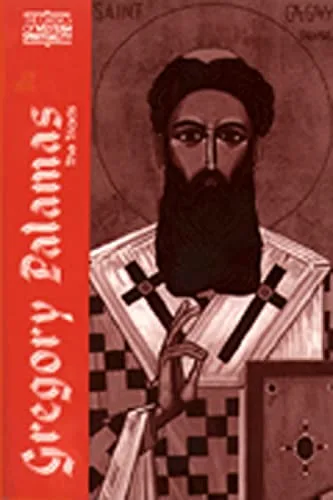
In the 1330s a Calabrian scholar named Barlaam visited Athos and was scandalised. He mocked the monks as omphalopsychoi, "people with their souls in their navels", and said of the light they claimed to see: "I only know that it does not exist." The defence was taken up by Gregory Palamas, an Athonite monk and later archbishop of Thessalonica, in a work known as the Triads.
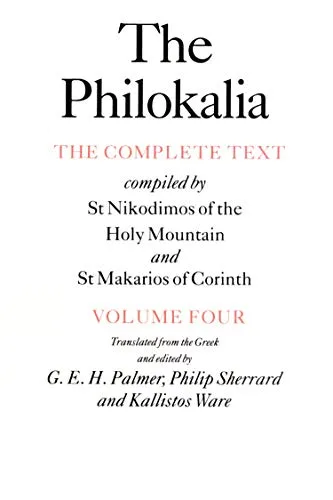
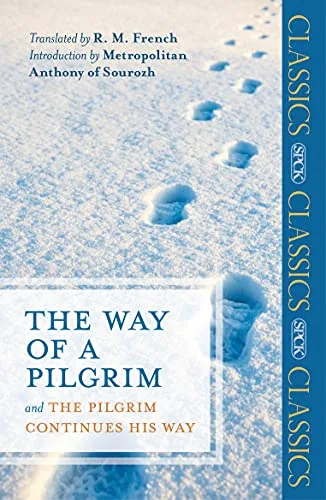
Palamas's answer is the key to the whole comparison. God's essence, he argued, is utterly unknowable; but God's energies — his activity in the world — are real, uncreated, and can be experienced. The light the monks saw was that uncreated light, the same light the disciples saw on Mount Tabor at the Transfiguration. Councils in Constantinople condemned Barlaam in 1341 and made Palamas's teaching the doctrine of the Orthodox Church in 1351. Two and a half centuries later, his writings and the method itself were gathered into the Philokalia, printed in Venice in 1782; a Russian translation is the book carried by the wandering hero of The Way of a Pilgrim.
The coincidence of vocabulary is real and it is a trap. Palamas's "energies" are not qi. For the hesychast the light is God's, given by grace; nothing is accumulated, nothing is stored, and nothing the monk does produces it. For Mo Pai the charge is the practitioner's own, built by effort and held in the body like a battery. The postures converge. The theologies point in opposite directions.
What the Catholic Church has said
The Western Church has addressed this territory directly. In 1989 the Congregation for the Doctrine of the Faith, under Cardinal Joseph Ratzinger, issued a letter on Christian meditation that was largely about "eastern methods". It is not hostile to them: the Church, it says, "rejects nothing of what is true and holy in these religions", and it acknowledges that Eastern Christianity itself values the "psychophysical symbolism" of posture and breath, citing the Jesus Prayer. But it draws a line that bears exactly on Mo Pai's early stages:
Read from Mo Pai's side, that is a striking concession: the Church grants that bodily techniques reliably produce warmth and light, and simply denies that those are grace. Twenty years later the US Catholic bishops applied the same logic to Reiki, distinguishing "healing by divine grace" from "healing that utilizes the powers of nature", and concluding that Reiki's "universal life energy" is unknown to natural science and its practice inappropriate in Catholic institutions. Neither document mentions qi or Mo Pai. But a Catholic reader asking where Chang's reported healings would sit has the framework: if real, a natural power, not a charism; and as far as science can tell, not established as real.
Miracles, powers and the temptation of display
Christianity has its own long tradition of people who heal by touch — the laying on of hands in the Letter of James, the "royal touch" English and French kings offered for scrofula until the eighteenth century, the healing services of modern Pentecostalism. It also has an equally long suspicion of power sought for its own sake. In the Acts of the Apostles, Simon Magus offers the apostles money for the power to confer the Spirit and is rebuked; his name survives in the word simony. Among the Desert Fathers, an old monk raises his hands, his fingers become "like ten lamps of fire", and he tells his visitor: "If you will, you can become all flame" — and the collections of their sayings return again and again to the danger of wonders to the soul of the one who works them.
The Buddhist monastic code has a near-identical rule, made after a monk levitated to win a prize and was rebuked by the Buddha for displaying powers before laypeople. Mo Pai's sources describe the same attitude: Chang impatient with visitors who wanted demonstrations, treating them as remedial work, and paying for each one. Across three traditions the pattern is the same, and it is the most solid common ground on this page. Whatever these powers are, the people closest to them say that wanting them is the problem.
The Western energy tradition
A Western audience in 1988 also had a more secular inheritance: two centuries of claims that the body runs on a force science had not yet measured.
| Date | Claim | What happened |
|---|---|---|
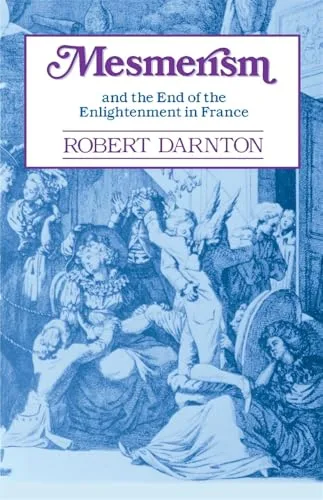
| 1770s | Franz Anton Mesmer’s "animal magnetism": a fluid passed from healer to patient, producing crises and cures | A French royal commission of 1784 including Benjamin Franklin and Lavoisier found no fluid and attributed the effects to imagination. Mesmerism became hypnosis. |
| 1845 | Karl von Reichenbach’s "Od" force, seen as auras by sensitive people | Could not be replicated; dropped from science. |
| 1875 | The Theosophical Society imports Hindu and Buddhist ideas of karma, subtle bodies and hidden masters | Became, scholars argue, the main matrix of the later New Age movement. |
| 1930s | Wilhelm Reich’s "orgone", a universal life energy that could be collected in boxes | Reich was prosecuted by the US Food and Drug Administration and died in prison in 1957. |
Every one of these claimed something Mo Pai also claims: a real, physical energy, transferable between people, with healing effects, demonstrable to observers. Every one was tested and failed. That is not proof that Mo Pai's claims are false. It is the base rate a Western audience carries into the room, and it explains why "Dynamo Jack" was received less as a revelation than as the latest entry in a familiar genre.
Jung, kung fu and the Force
The Taoist side of that inheritance arrived later. In 1929 Carl Jung published his commentary on The Secret of the Golden Flower and taught the West to read Chinese alchemy as a map of the psyche — a reading that still shapes how Western readers approach the subject, and that Mo Pai's literal, physical claims directly contradict. In 1972 the television series Kung Fu put a Shaolin monk quoting adapted lines from the Daodejing into American living rooms; for a week in 1973 it was the most-watched programme in the country.
And in 1977 Star Wars gave the West its most successful image of an energy that binds living things and can be trained to move objects and sense others. George Lucas said he took the phrase from a 1963 Canadian art film and meant the Force as a non-denominational distillation of "the essence of all religions"; the link to qi is something critics and fans drew, not something he claimed. It stuck all the same. A 2008 interview with Jim McMillan was published under the headline "Return of the Jedi", and introduced Mo Pai as "a real-life order of Jedi Knights". For a large part of Mo Pai's Western audience, that was the frame before anything else.
The predicament
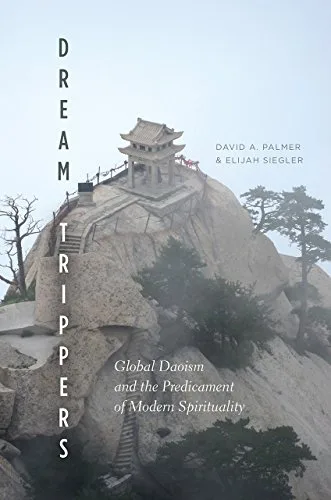
The anthropologists David Palmer and Elijah Siegler, in Dream Trippers, describe what happens when Western spiritual travellers go looking for Taoism in China: they find monks for whom Taoism is a religion of ritual, obligation and community, and they want instead a portable technique of personal experience, detachable from any of that. Mo Pai, as it reached the West, was almost a pure case of what the travellers wanted — a technique without a church, a master without a temple, power without doctrine. That is part of why it travelled so well, and part of why it is so hard to assess: the context that would normally hold such a practice in check did not come with it.