
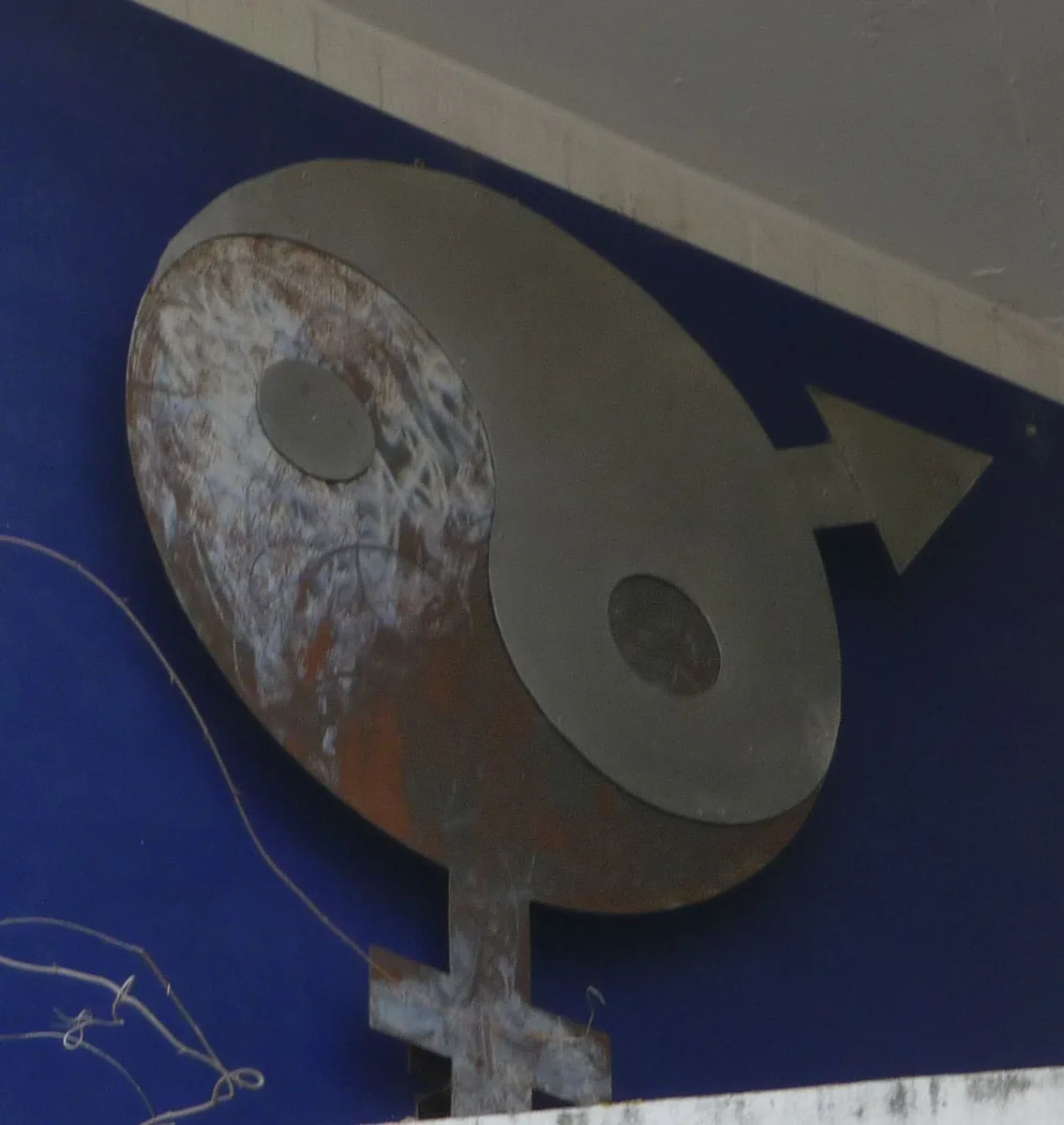
Mo Pai's theoretical vocabulary is standard Taoist internal alchemy, deployed with unusual literalism. Understanding it requires taking two steps: first grasping what the tradition means on its own terms, and then — separately, and without confusing the two — asking what could be true about it.
This is the theory behind the technique. The technique itself — posture, ground, lock, breath, attention, and the stages the training passes through — is set out in Practice, and the two are worth reading together: almost every instruction there is downstream of a claim here.
The tradition's account
Qi (氣) is the operative substance. Not "energy" in the physicist's sense, and the translation does real damage; qi in Chinese thought is closer to a breath, a vapour, an animating pervasion that constitutes things as much as it moves through them. The term has a long history and a wide range, treated at length in Qi: The Word Everything Rests On.
Yin qi is the heavy, dense, cool, downward, earthy pole. It is what level 1 accumulates, drawn from the earth and converted from the body's own jing. In Mo Pai's telling it has quantity — you can have more or less — and location, and it can be felt as a physical mass by a second person's hand.
Yang qi is the light, hot, rising, celestial pole, drawn from above. It is introduced at level 3.
The fusion (the kan-li operation, from the trigrams Water and Fire) unites them. The result is described in explicitly electrical terms: two opposite poles in a single vessel, a potential between them, a stored charge. This is where Mo Pai departs from the more metaphorical registers of neidan. Most alchemical texts describe the union of yin and yang as producing an elixir, an embryo, a pearl. Mo Pai describes it as producing a battery.
Jing → Qi → Shen → Xu is the classical ladder underneath: essence refined into energy, energy into spirit, spirit into emptiness, emptiness returned to the Tao. Mo Pai's seventy-two levels map onto this progression, with the documented foundation occupying the first transition. The three treasures and the refinements between them are set out in The Three Treasures: Jing, Qi, Shen.
Danaos and the engineer's reading
Kosta Danaos was an engineer, and The Magus of Java contains an extended attempt to give qi a physical account. The book reaches for bioelectricity, for the body's known electromagnetic activity, for speculation involving the then-fashionable frontiers of physics. It is the part of the book most shaped by its author's training, and the part that travelled furthest into the online discussion that followed.
What the practice plausibly does
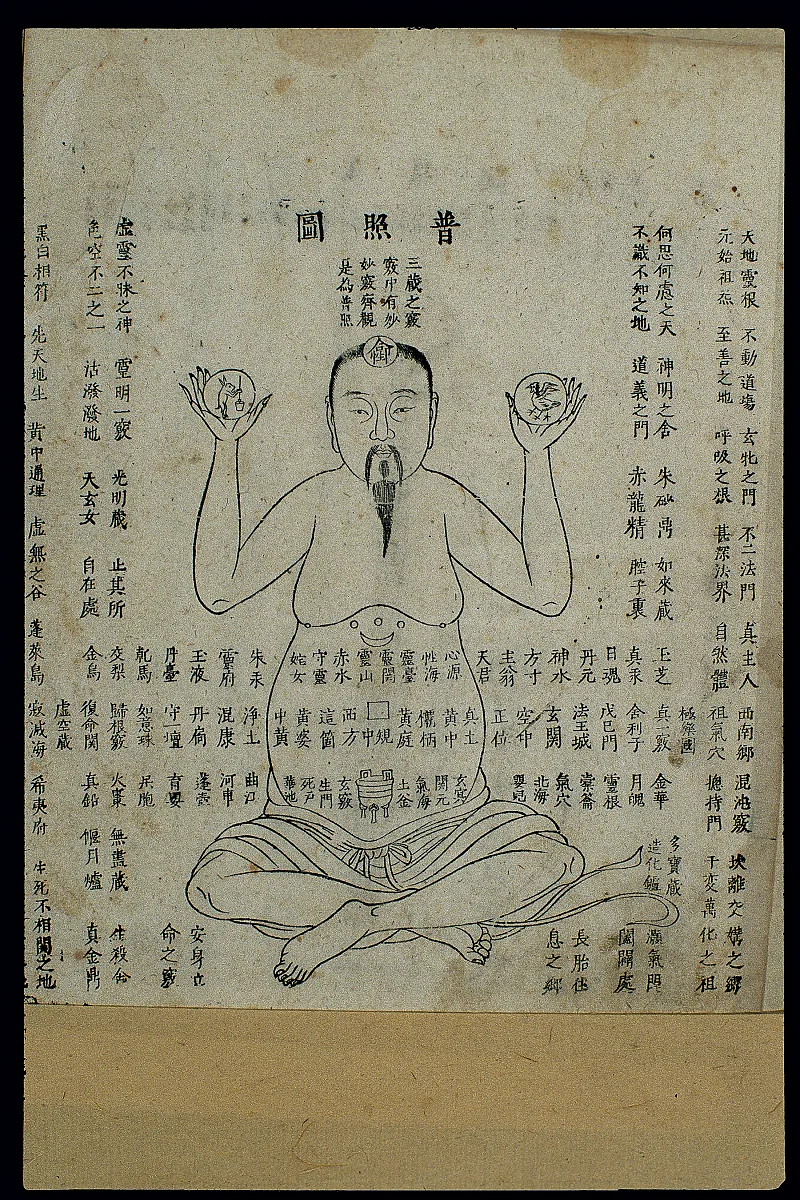
There is a reading of the tradition that sits comfortably alongside modern physiology, and it goes roughly like this. Traditional Chinese physiology is a functional model, developed over two thousand years by people who could not see inside a living body but could observe its behaviour very carefully. Some of what it encodes is now recognisable: the dan tien region corresponds to a genuine centre of postural and respiratory mechanics; the "gates" of the spine sit at real anatomical transitions; the perineal lock engages a real muscular sling with real autonomic consequences; slow breathing with retention has documented effects on vagal tone, CO₂ tolerance, baroreflex sensitivity, and subjective interoception. Sustained practice of the kind Mo Pai prescribes would produce dramatic and unusual interoceptive experience in anyone who did it.
That gives you a real practice with real effects and a traditional vocabulary that describes them precisely. It is the part of the account that anyone can follow without leaving the physiology they already know — and it covers the sitting, the breath, the lock, and the interoceptive experience the sources describe at levels 1 and 2.
The measurement question
Accounts circulate of Chang's qi being instrumented — voltmeters, oscilloscopes, television crews with equipment, researchers with meters. Several of these visits appear to have happened in some form, and the readings reported from them are repeated throughout the community literature, though no full write-up of any session was ever published.