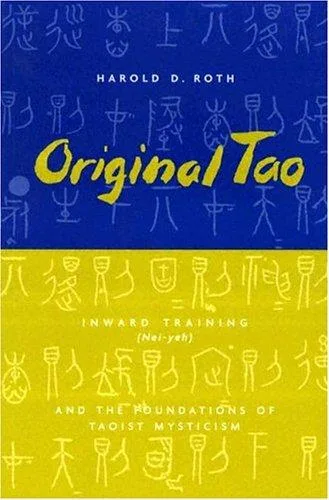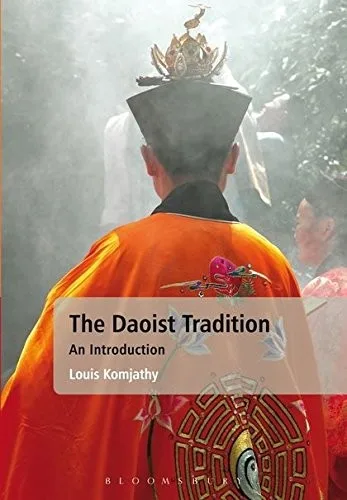
Neiye (內業) means "inward training" or "inner work". It is a short text — a few hundred lines of rhymed verse — preserved as chapter 49 of the Guanzi, a large and miscellaneous compilation attached to the name of a seventh-century BCE statesman who certainly did not write it. It is usually dated to the fourth century BCE, which makes it roughly contemporary with Mozi's own school, and it is the oldest surviving Chinese text that describes cultivating qi as a deliberate practice.
What it says
The text's subject is jing (精), the vital essence, and its argument is that this essence can be attracted, stored, and lost. A body arranged correctly holds it; a body agitated by appetite, anger or worry leaks it. The prescription is physical before it is anything else: align the body, keep the four limbs square, hold the posture, regulate the breath until it is fine and even, and make the mind still enough that the essence will settle there of its own accord. What arrives, in the text's language, is shen (神) — spirit, or the numinous — and it arrives as a guest that stays only where the accommodation is right.
By concentrating your qi as if numinous, the myriad things will all be contained within you. Can you concentrate? Can you unify? Can you know good and bad fortune without divining? Can you stop? Can you halt? Can you not seek it in others, but attain it within yourself?
Neiye, in Harold Roth's reading — the passage the Zhuangzi and the Daodejing both echo
Two things are worth noticing about that. The first is how practical it is: the instructions are about posture, breathing and emotional regulation, in that order, and the promised results are health, clarity, longevity and a kind of perceptual acuity rather than power over the world. The second is that the same lines turn up, adapted, in the Daodejing and the Zhuangzi — which is the reason Harold Roth and others have argued that this text, or the milieu it came from, is where Taoism's contemplative core actually originates, with the philosophical classics as later literary developments of it rather than the other way round.
What it does not say
There is no dan tien in the Neiye. There is no orbit, no circulation through named gates, no distinction between yin and yang qi to be fused, no ladder of levels, no teacher-certified attainment, and no alchemy — no metaphor of a furnace, a cauldron, an elixir or an embryo. All of that is later, most of it by a thousand years or more. What the Neiye has is the proposition on which every one of those systems is built: that there is something in a person that can be gathered by stillness and spent by agitation, and that the gathering is trainable.
That absence is the most useful thing about the text for a reader of this archive, because it dates the vocabulary. When a modern tradition says its methods are twenty-five centuries old, the Neiye is the control: it is what a genuinely twenty-five-century-old cultivation text looks like, and it does not look like the Mo Pai method. It looks like the ancestor of it.
Why this page is in this archive
Because it is the strongest thing that can honestly be said for the antiquity of the practice, and it deserves to be said properly. If the claim is "Mo Pai's specific curriculum descends unbroken from the Warring States", the Neiye does not help: nothing in the Neiye is Mo Pai's curriculum. But if the claim is "sitting still, straightening the spine, slowing the breath and holding the attention inward is an ancient Chinese practice with a continuous documented history", then the Neiye is the beginning of that history, and it is on the shelf where anyone can read it.