Life
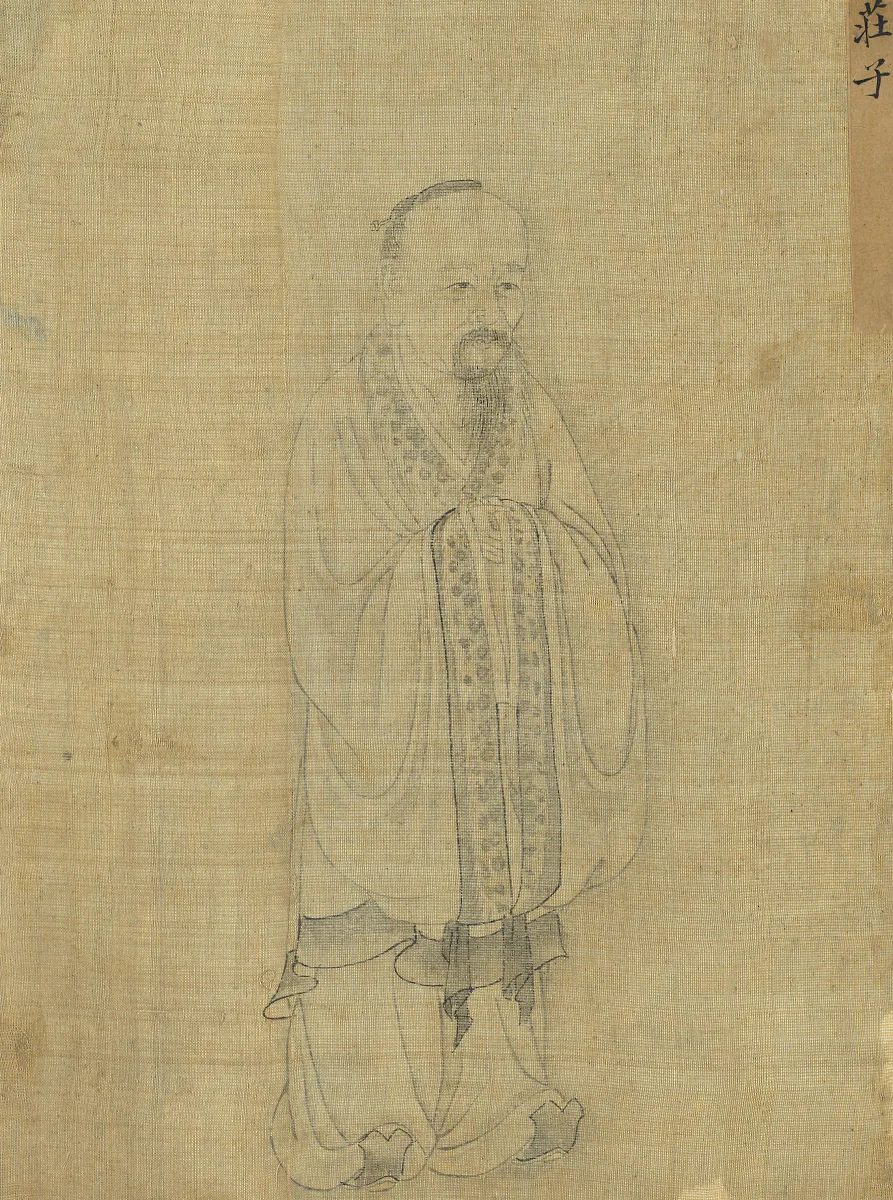
Zhuang Zhou lived in the fourth century BCE and, unlike most of his contemporaries, was not trying to advise a ruler. The book that carries his name — the inner chapters are generally accepted as his, the rest as his school's — argues by anecdote, joke and paradox rather than by system, and is the only philosophical classic in the language that is genuinely funny.
Two passages matter here. Zuowang, "sitting and forgetting", describes dropping the body, dismissing the intellect and merging with the great thoroughfare — the oldest description in the tradition of the state seated practice is after, and much closer to what Mo Pai asks for than any visualisation method. And the remark that the true person of old "breathed with their heels, while ordinary men breathe with their throats" is quoted in every discussion of deep breathing from the Han to the present.
He is also the source of the tradition's standing warning about powers. The Zhuangzi is dismissive of the longevity specialists — the people doing daoyin in order to live a long time — and the passage reads as the first recorded complaint that the technique had become the point.