
Why it is on this list
The study that put Chinese alchemy on a scholarly footing in English, built around Sun Simiao and the laboratory tradition. Dated in places and still the reference point for how the operational texts should be read.
The study that put Chinese alchemy on a scholarly footing in English, built around Sun Simiao and the laboratory tradition. Dated in places and still the reference point for how the operational texts should be read.
The old standard English translation of a neidan manual. Read it beside the Mo Pai level descriptions and the borrowing is obvious: the gates, the circulations, the embryo, the spirit body, in the same order.
View on AmazonStart here
The best short scholarly introduction to neidan. Pregadio is a historian of religion rather than a practitioner, which is exactly why he is useful here: he describes what the tradition says without needing it to be true.
The standard scholarly account of Chinese alchemy before it turned inward: the Taiqing scriptures, the ingredients, the ritual around the furnace, and what the practitioners believed an elixir was for. Read it and the…
The founding text of Chinese alchemy, in a translation with the commentary a reader needs to survive it. Both the external and the internal traditions read the Cantong qi as their own charter, which tells you how much…
Needham on Chinese alchemy as chemistry: the apparatus, the reactions, the poisonings, and the argument that this tradition is a real experimental science rather than a symbolic one. Enormous, expensive, and the reason…
A historian of Chinese science on how alchemy and medicine actually appear in the written record — including in poetry and fiction, where most people met them. Useful for seeing the tradition as its own readers did…
One of the central texts of internal alchemy, with commentary. The kan-li operation that Mo Pai calls level 3 is this literature's central concern.
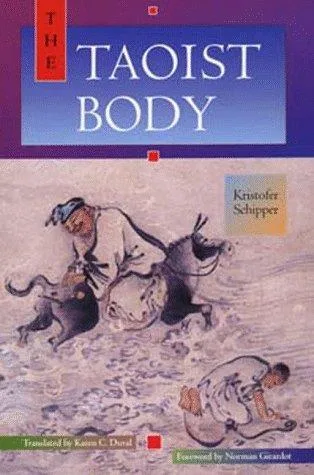
A scholar who was also an ordained Taoist priest, writing on how the body is conceived in Taoist practice. The best correction to the assumption that qi talk is a clumsy attempt at physics.
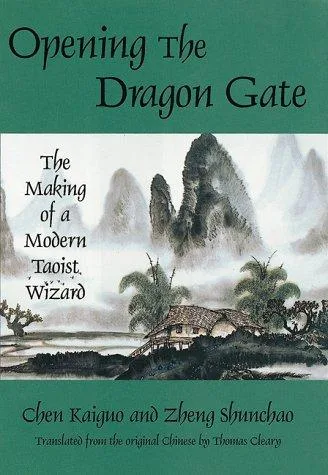
The biography of Wang Liping, a modern Longmen inheritor. Structurally the closest thing in print to The Magus of Java — a hidden lineage, a living master, extraordinary claims, one devoted chronicler.
A modern Chinese master's systematic summary of the neidan process, stage by stage. The clearest published statement of the three refinements that Mo Pai's levels enumerate.
The Shangqing visionary tradition in scholarly detail — the interior practice that fed into internal alchemy, several centuries before anything called neidan existed.
A short neidan classic on circulating the light and gestating the spirit body. Read this translation rather than the famous Wilhelm–Jung one, which worked from a defective text and a psychological reading of it.
Twenty-odd neidan texts in translation, from the Tang to the Qing, with enough apparatus to see how the vocabulary shifts between them. The single most useful volume for anyone trying to work out what a reconstructed…
Four essays on the logic of neidan — the inversion at the centre of it, the meaning of the ingredients, and why the same operation is described in incompatible ways by different lineages. Short, and the clearest thing…
A collection covering the practices that sit underneath the alchemical literature: breath, visualisation, guiding and pulling, sexual technique, and the early meditation traditions. The volume to read before deciding…
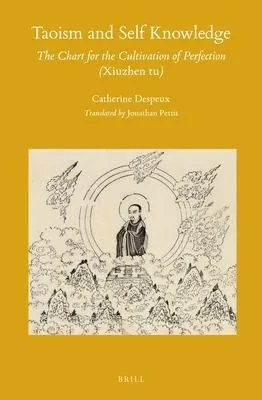
A full study of the Xiuzhen tu — the chart this archive uses to illustrate the alchemical body — tracing what each figure in it stands for and where the image came from. The best answer available to the question of…
What the first Quanzhen masters actually told their students to do, drawn from their own writings rather than from later hagiography — including the ascetic practices, the reported signs, and their own warnings about…
A broad sourcebook of short texts on jing, qi and shen across two thousand years. Cleary translates for readability rather than for precision, which makes this a good first encounter and a poor last word.
The other English Wuzhen pian, with Liu Yiming’s commentary attached. Set beside Pregadio’s translation it shows how much of a neidan text is decided by the commentary a translator chooses to follow.
Essays on neidan as a social phenomenon as well as a technique: who practised it, what it cost them, how lineages organised themselves around it, and what the claim of immortality did inside a community that believed it.
Needham on the turn inward — the volume where the laboratory work becomes work on the body, covering the physiological alchemy, the sexual techniques and the respiratory practices. Idiosyncratic, enormous, and still…