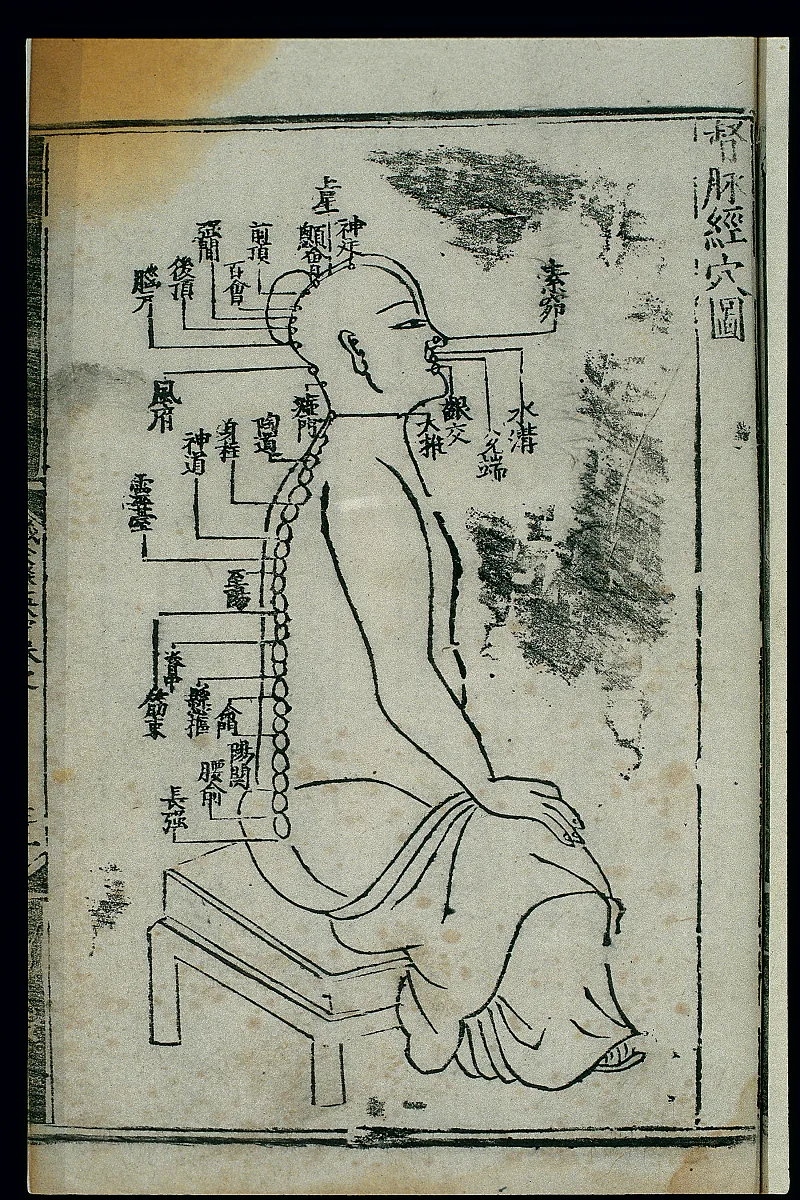
Of all the techniques in Taoist internal practice, one is better known in the West than any other, and it has an English name that sounds like astronomy. The microcosmic orbit is a circuit: attention, breath and whatever the practitioner understands to be moving with them travel up the back of the body from the base of the spine to the crown, and down the front to the abdomen, and around again. In Chinese it is the xiao zhoutian (小周天), the "lesser heavenly circuit" — lesser because there is a greater one, the da zhoutian, that comes after it.
The two vessels
The route is medical before it is alchemical. Classical Chinese medicine describes eight "extraordinary vessels" alongside the twelve regular channels, and two of them run along the midline of the trunk. The du mai, the Governor Vessel, rises from the base of the spine, up inside the spine to the back of the head and over the crown. The ren mai, the Conception Vessel, rises from below the abdomen up the front of the body to the throat and face. The Huangdi neijing describes the ren mai; the Nanjing, usually dated to the first or second century CE, gives the course of both. Join them at the top and the bottom and you have a loop.
The circuit in neidan
Internal alchemy took that loop and made it an engine. In the codification of the Southern Lineage, the lesser circuit is the main practice of the first stage, the refining of essence into qi. Essence, regulated by the fire phases, rises along the spine, passes three barriers, reaches the head, and descends along the front through the three elixir fields.
Two images run through the texts. One is the heche (河車), the "river chariot" or waterwheel that lifts water uphill — already in Zhang Boduan's Wuzhen pian of 1075, where it "dares not stop for one moment". The other is the three passes, named by the thirteenth-century writer Xiao Tingzhi: the weilü at the tailbone, the jiaji between the shoulder blades, and the yuzhen, the "jade pillow", at the back of the skull. Late diagrams like the Neijing tu draw the whole thing as a landscape, with the spine as a mountain range and a waterwheel lifting water up it.
When exactly the phrase "lesser heavenly circuit" became standard is not certain; the mechanism is attested from the Song, and the paired terms lesser and greater circuit are prominent in the manuals of the Ming and Qing.
How it reached English
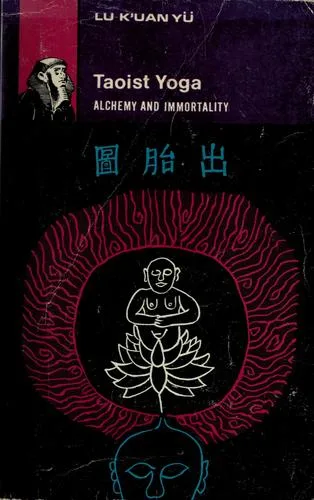
Through two books, forty years apart in spirit. In 1970 Charles Luk (Lu K'uan Yü), a Hong Kong translator best known for Buddhist texts, published Taoist Yoga: Alchemy and Immortality, a translation of a manual by Zhao Bichen, a practitioner born in 1860 in a branch of the Wu–Liu tradition. Luk's translation speaks of the "microcosmic orbit" and the "macrocosmic orbit", and it is the main route by which those terms entered English. It also carries the tradition's cautions: don't fix the attention rigidly on points in the body, don't mistake heat for the real thing, follow a strong fire with a gentle one, and learn from a teacher.
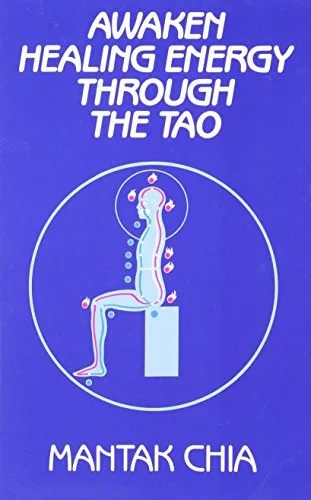
In 1983 Mantak Chia, a Thai-born teacher working in New York, published Awaken Healing Energy Through the Tao, which taught the orbit directly to a general Western readership as a self-help practice. It sold widely, went through several revised editions, and made "the microcosmic orbit" a standard phrase in Western energy-work. Chia's version is simpler and more confident than the classical one, and much of what Western forums believe about the circuit — including much of what they believed about Mo Pai's second level — comes from it rather than from the Chinese texts.
Forcing it
The classical literature is full of warnings, and they cluster around one mistake: trying to push the circuit open instead of letting it open. The fire phases exist to regulate the process; the texts describe excess heat rising to the head, sleeplessness, agitation and worse when the regulation is ignored. The Chinese phrase for the disaster is zou huo ru mo, "the fire runs wild and enters the demonic".
That phrase is not only historical. During the qigong boom Chinese psychiatry saw enough cases to classify them: "qigong deviation" entered the Chinese Classification of Mental Disorders in 1989, and the American DSM-IV included "qi-gong psychotic reaction" among its culture-bound syndromes in 1994. A study at the Shanghai Qigong Institute found that most of the people it treated for deviation had practised alone or without a teacher. Nancy Chen's Breathing Spaces is the best account of how Chinese doctors handled it.