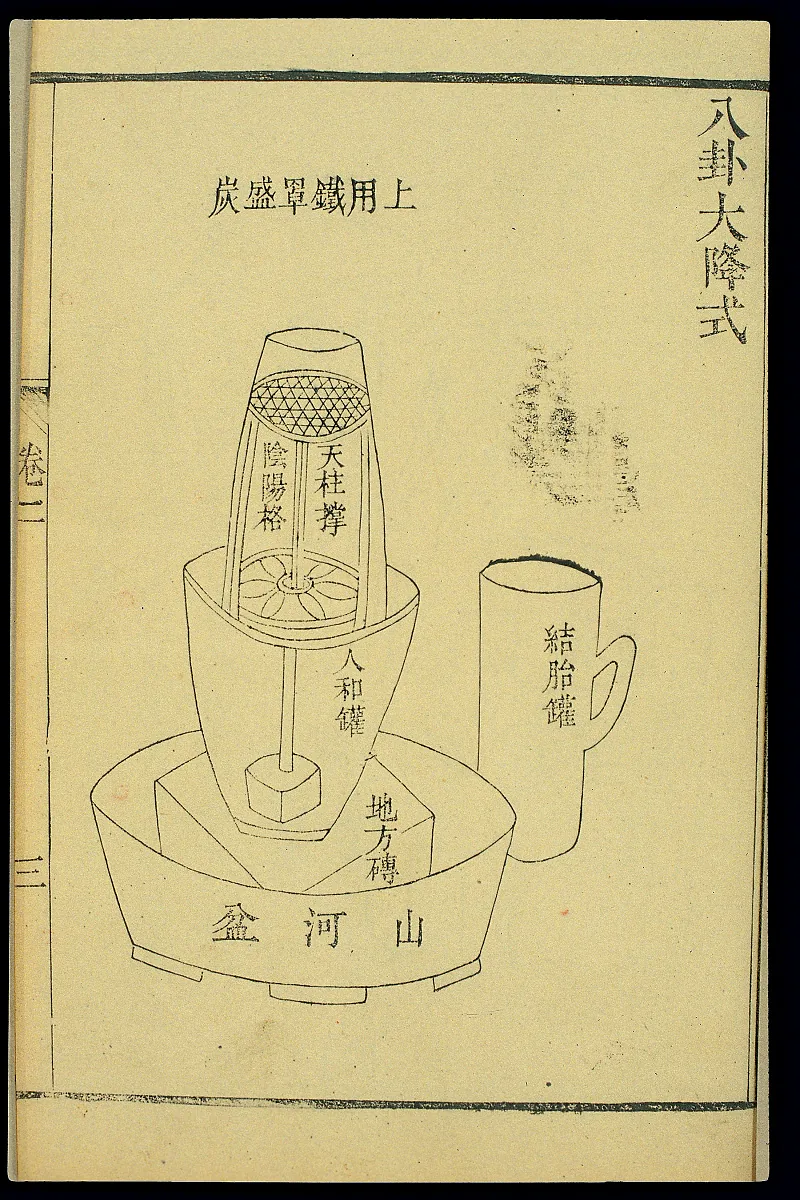
Neidan, the internal elixir, is named the way it is because there was an external one first. For something like a thousand years before anybody relocated the work inside the body, Chinese alchemists were doing it the hard way: in a sealed crucible, over a measured fire, out of minerals that would kill you.
What they were making
The word at the centre of it is dan (丹), which means cinnabar and means red and means elixir, and the ambiguity is not an accident. Cinnabar is mercury sulfide, and it is the most suggestive mineral an early chemist could have been handed: heat it and it gives up quicksilver, a liquid metal that behaves like nothing else; recombine the quicksilver with sulfur and the red returns. A substance that can be destroyed and restored, apparently at will, is a very short step from a substance that could do the same for a person.
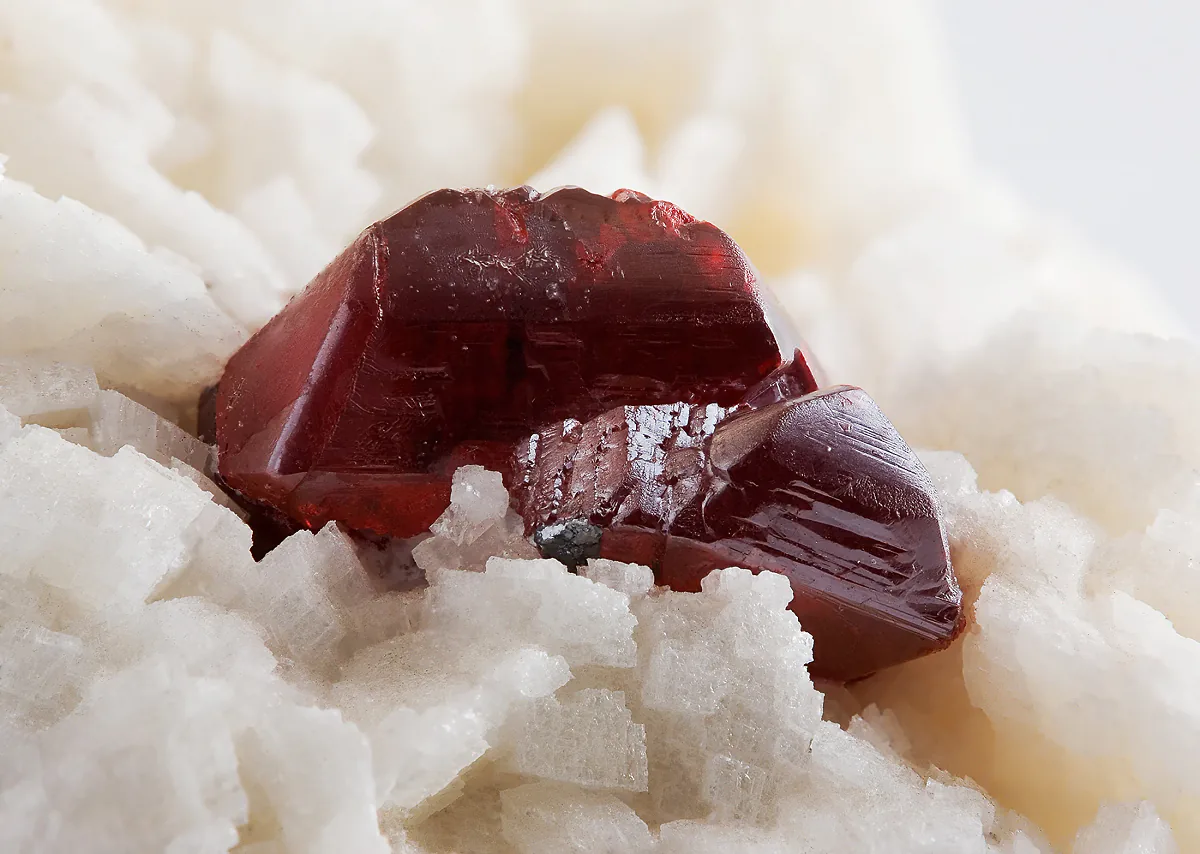
That cycle is the huandan (還丹), the "reverted elixir", and reversion is the operation the whole tradition is built around. The ingredient list ran to cinnabar, mercury, lead, realgar, gold, mica and a dozen others; the apparatus was a crucible sealed with clay inside a furnace; the variable that mattered most was the huohou (火候), the fire times — how hot, how long, in what sequence. Get the firing right and the substance was said to transmute; get it wrong and you had wasted a year and a fortune in materials.
The literature
The founding text is the Cantong qi (參同契), the "Seal of the Unity of the Three", attributed to Wei Boyang and dating in some form to the Han. It reads as a cosmological poem — trigrams, lunar cycles, the pairing of lead and mercury — and it is deliberately obscure. Its later importance comes precisely from that obscurity: both the external and the internal traditions could read it as their own charter, and both did.
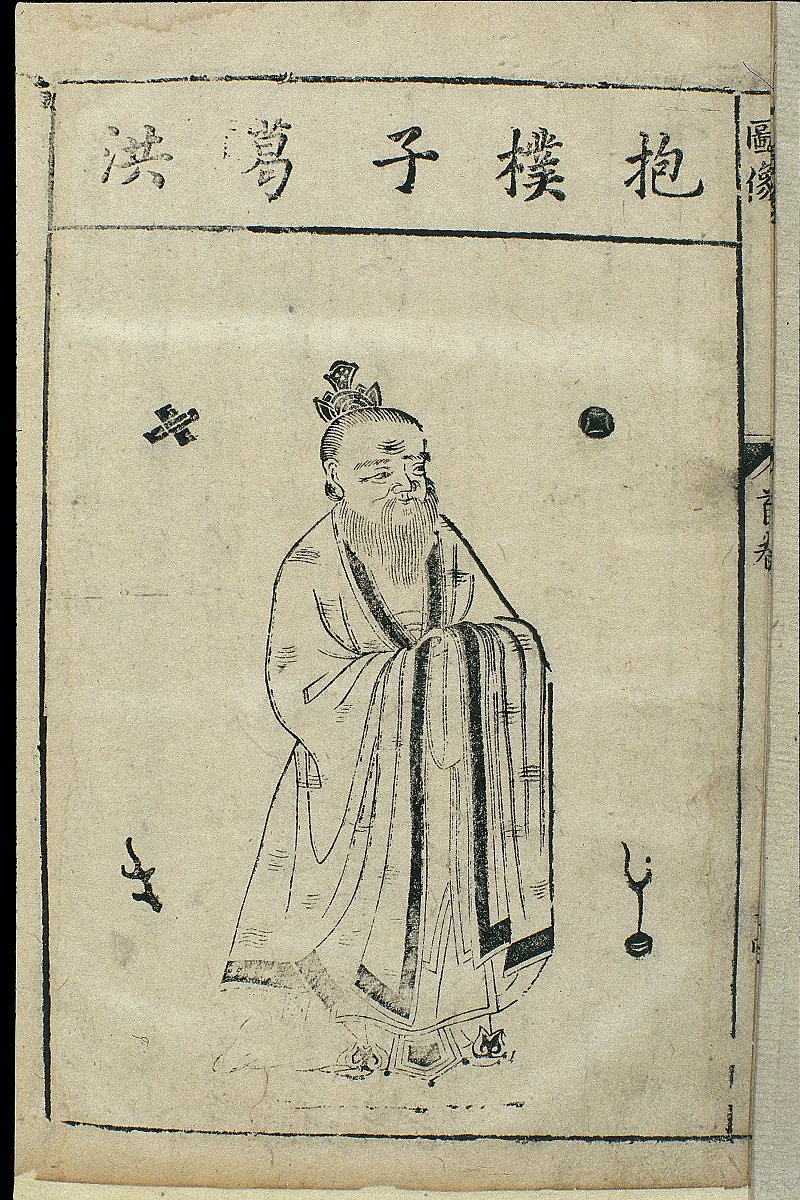
The fullest early account of practice is Ge Hong's Baopuzi, written around 320 CE, which is where a modern reader gets the texture of the thing — the ingredients, the mountains you had to retire to, the purifications, the talismans, the insistence that the recipes were useless without oral instruction from a teacher. Two centuries later the Taiqing or "Great Clarity" scriptures give alchemy its ritual frame, and it is that body of material — not the internal work that displaced it — that the historians mean by classical Chinese alchemy.
The poisonings
Elixirs made of mercury and lead do what elixirs made of mercury and lead do. The Chinese record is unusually frank about it: a run of Tang emperors is reported to have died of elixir poisoning, and the symptoms described in the sources — tremor, delusion, wasting, sudden death — are recognisable heavy-metal toxicity. The tradition had answers. Some deaths were reframed as shi jie, "liberation by means of a corpse", in which the body left behind was a discarded garment rather than a failure. Others were put down to impure ingredients, an incorrect fire, or a practitioner who had not earned the transmission.
Both explanations should be familiar to anyone who has read this archive's account of what happens when unsupervised practitioners are injured. A tradition with a strong theory and no external check will reliably explain its casualties from inside the theory — and the same move is available whether the harm comes from swallowing mercury or from forcing heat up the spine for six hours a day. See Safety.
The turn inward
From roughly the Tang the external work declines and the internal work rises, and the transposition keeps the entire vocabulary. The furnace and the cauldron become regions of the body. Lead and mercury become the two poles gathered in the practitioner. The fire times become the breath and the attention. The elixir becomes something the body makes out of itself, and immortality stops being a substance you swallow and becomes a condition you refine your way into.
Nothing about that transposition is hidden — the neidan texts say plainly that they are reading the old operations as descriptions of the internal process — but it does mean that every term in this archive's glossary arrives carrying a literal, operative, laboratory sense underneath the figurative one. When a Mo Pai instruction says the lower field is a vessel that must be sealed or its contents drain, the metaphor is a crucible, and the crucible was real.
Was it chemistry?
Joseph Needham's answer, over several enormous volumes, was yes — that this is a genuine experimental tradition with real apparatus, real reactions and real results, including one that changed the world when an elixir experiment produced gunpowder. Later historians have tempered the framing without overturning it: the alchemists were not proto-chemists in disguise, they were pursuing an explicitly religious goal, and they nonetheless accumulated a body of laboratory knowledge that no purely symbolic tradition could have produced.