Life
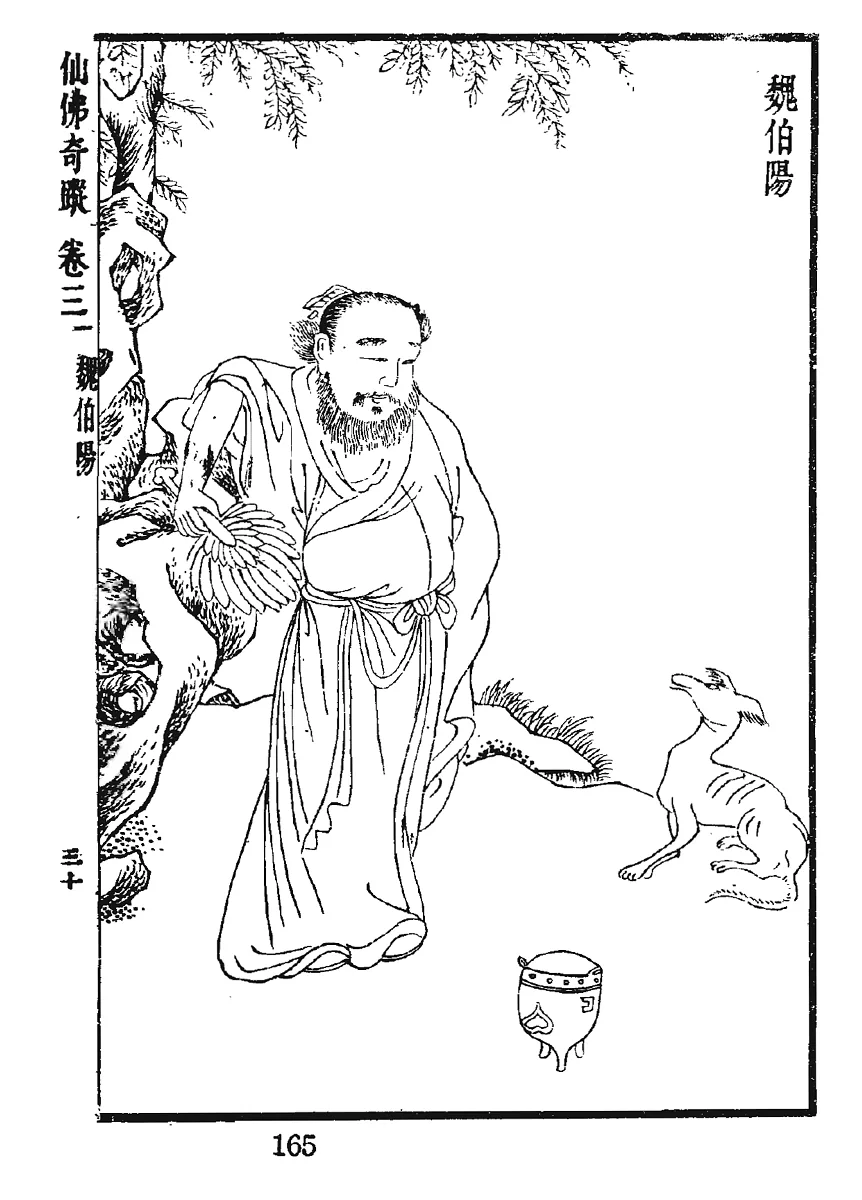
Wei Boyang is a name with a text behind it and very little else. The traditional account makes him a Han-dynasty adept from Wu; the Cantong qi — "the Seal of the Unity of the Three" — is attributed to him, and the attribution is as secure as most attributions of that period, which is to say not very.
The text is the important thing. It reads as a cosmological poem: trigrams, lunar cycles, the pairing of lead and mercury, the timing of a fire. Whether it was originally about a furnace, about the body, or about the correspondence between them has been argued for eighteen centuries, and its influence comes precisely from that ambiguity — external alchemy and internal alchemy both took it as their founding statement.
For a reader of this archive it is the beginning of the vocabulary. Furnace, cauldron, lead and mercury, the firing schedule: every one of those words reaches Mo Pai through a line that starts here.