Life
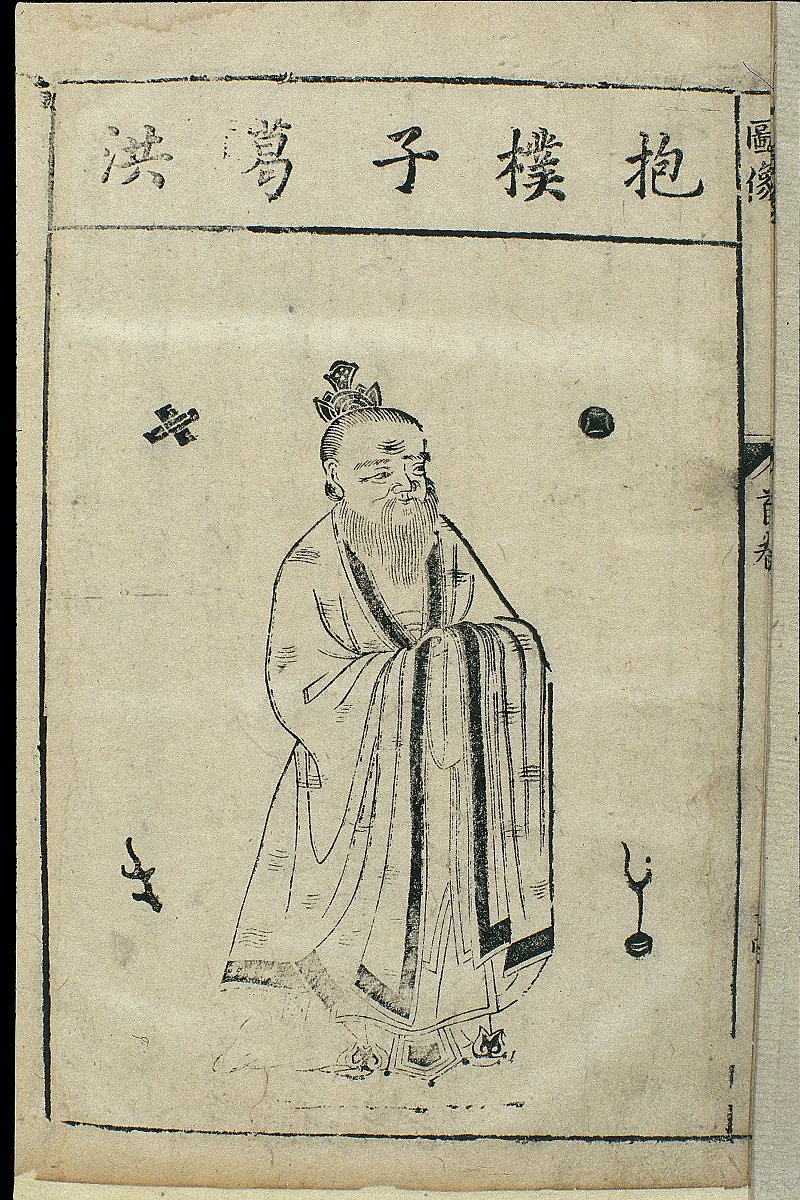
Ge Hong was an official, a physician and an alchemist, and the Baopuzi — "The Master Who Embraces Simplicity", written around 320 CE — is the fullest early account of the alchemical enterprise that survives. Its inner chapters cover elixirs, ingredients, talismans, the mountains one had to withdraw to, and the ailments the practices were supposed to prevent.
Two things in it bear directly on this archive. The first is the insistence that the recipes are useless without oral instruction from a teacher: the written text is a mnemonic for something transmitted in person, which is precisely the claim Mo Pai makes about its own leaked instructions. The second is his account of foetal breathing, including a counting drill for extending the interval — an instruction rather than a metaphor.
He is also a useful corrective to the idea that this tradition was ever uncritical. Ge Hong argues, weighs evidence, complains about impostors, and distinguishes what he has seen from what he has been told. He believed in the elixir; he did not believe everybody who claimed to have made one.