Life
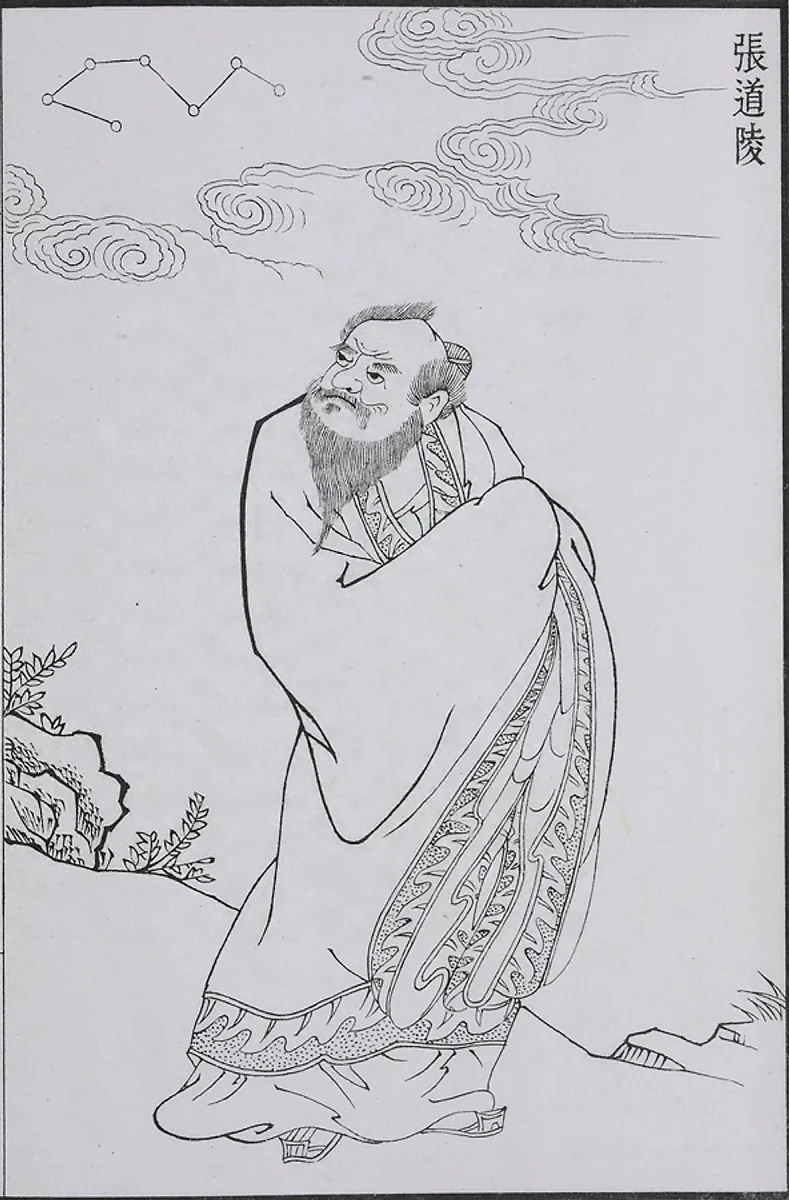
The traditional account puts Zhang Daoling on Mount Heming in Sichuan in 142 CE, receiving an appointment from Taishang Laojun — Laozi, deified — as his representative on earth. What he founded is the movement usually called the Way of the Celestial Masters, and by its critics the Way of the Five Pecks of Rice, after the contribution expected of members.
It had the features a religion has and a philosophy does not: parishes, appointed libationers, registers of members, confession as medicine, and petitions filed to a celestial bureaucracy. For a period under his grandson Zhang Lu it also governed territory outright, in the Hanzhong valley, until the submission to Cao Cao in 215 CE scattered the movement across China and made it national.
He is in this archive as a contrast rather than as an ancestor. Mo Pai has no liturgy, no priesthood, no ordination, no temple and no canon; what it shares with the religion is the technical vocabulary its alchemical literature preserved. See the Celestial Masters.