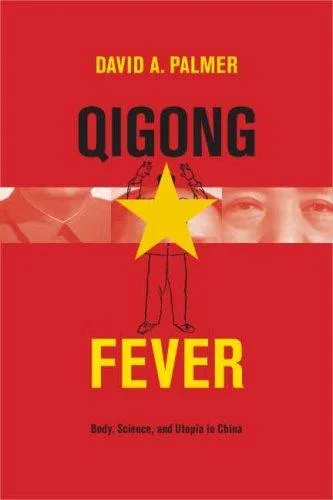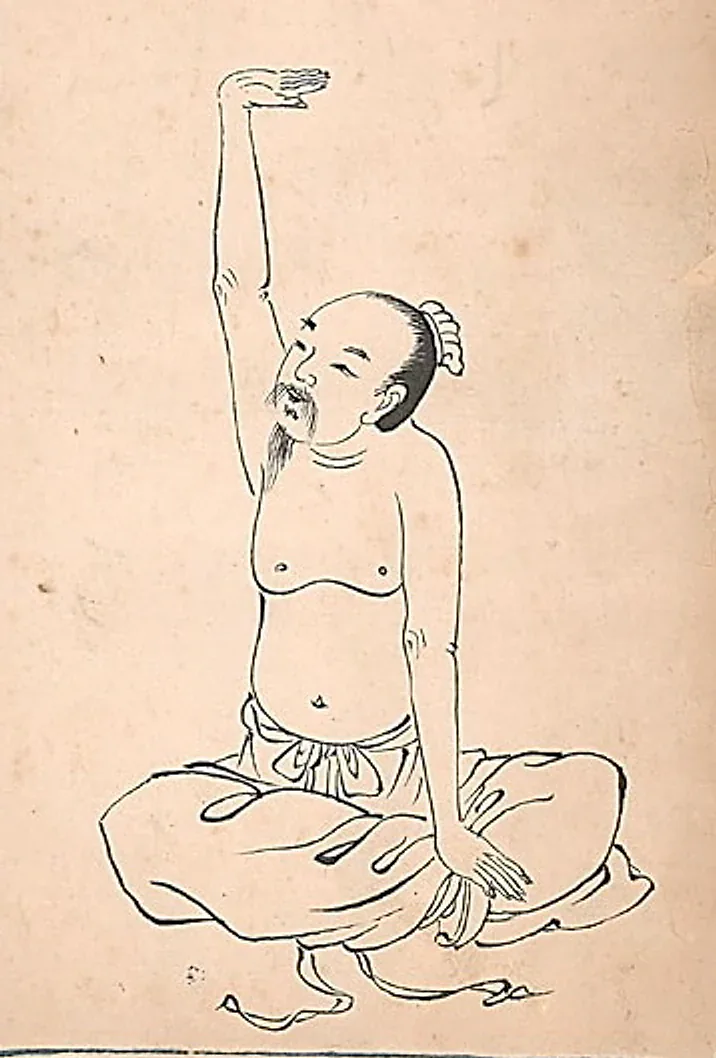
The word qigong (氣功) sounds ancient and is not. Its components are old and the odd earlier usage can be found, but as the name of a category of practice it dates to the early 1950s, when Liu Guizhen developed a therapeutic programme from techniques he had learned locally and taught it at a sanatorium in Tangshan, in Hebei. The state approved, clinics opened, and a textbook followed. The name it travelled under was qigong: "breath work", or more literally "the disciplined effort of qi".
Why the name was needed
Because the practices had a problem. Breathing exercises, seated meditation, visualisation and internal circulation arrived in the twentieth century wrapped in Taoist, Buddhist and sectarian religious language, in a new republic that regarded all of that as superstition and, after 1949, as politically suspect. A practice described as cultivating the immortal embryo had no future in a state hospital. The same practice described as a therapy that regulates the breath and calms the nervous system had one.
So the label did real work. It secularised, medicalised and nationalised an inheritance — separating technique from cosmology, submitting it to clinical evaluation, and making it Chinese rather than religious. It is one of the most successful rebrandings in the history of any traditional practice, and almost everything the world now calls qigong reaches us through it.
What Mo Pai calls itself
Not that. Mo Pai's own word is nei kung (內功) — internal work — which is older, broader, and belongs to the martial and alchemical vocabulary rather than the medical one. The distinction is not pedantry. Qigong, as the term was constructed, describes health maintenance: sets, forms, gentle movement, a therapeutic aim, and an implicit promise that nothing dramatic will happen. Nei kung describes the accumulation of internal power, with a martial ancestry and no such promise. Mo Pai's claims — a literal charge, a demonstrable effect, and a documented list of ways to injure yourself — sit on the second side of that line.