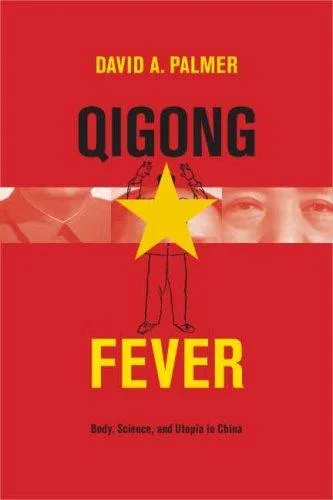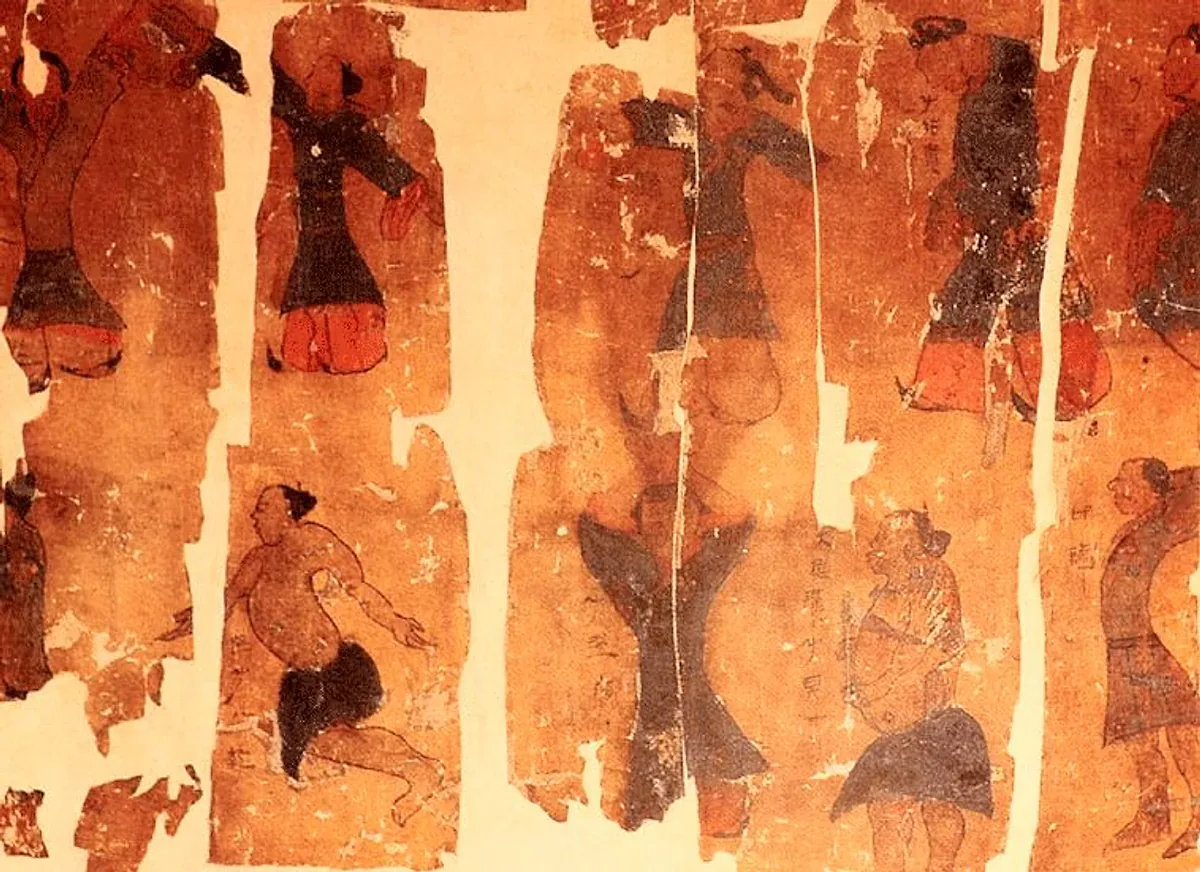
For about twenty years, from the end of the Cultural Revolution to 1999, China had a mass movement built around qi. At its height it was practised in parks by tens of millions of people before work, promoted in state media, taught by celebrity masters who filled stadiums, and studied in institutes attached to universities and to the defence establishment. It has no real Western equivalent, and nothing about this subject makes sense without it.
What the boom consisted of
Three things at once. The first was ordinary: enormous numbers of people doing gentle exercise and breathing practice in public spaces, for their health, in a country whose medical system was under strain. The second was charismatic: masters with names everybody knew, mass transmission events, healing demonstrations, and claims that escalated with the size of the audience. The third — the strangest to a Western reader — was official and scientific. Research programmes investigated waiqi, "external qi", as a measurable emission. Serious institutional figures argued that this was a frontier of science, and for a period the state agreed enough to fund it.
The 1988 Ring of Fire segment was broadcast into the middle of that. Western audiences saw a man in Java doing something inexplicable and had no category for it. Chinese audiences of the same period had a category, a vocabulary, several magazines, and a running argument about whether any of it was real.
The crash
It ended abruptly. Scientists and journalists had been pushing back for years, and the movement's scale had begun to look less like a health campaign and more like an unregulated network with mass membership and charismatic leadership outside party structures. The decisive moment came in April 1999, when around ten thousand Falun Gong practitioners assembled outside the leadership compound in Beijing. The organisation was banned that summer, the wider qigong sector was reorganised, mass transmission stopped, and what survived was re-regulated as ordinary health exercise under sports and medical authorities.
What it means for Mo Pai
Several things, none of them comfortable for either side of the argument.
- It explains the genre. "Master demonstrates energy for camera" was an established format with hundreds of instances in this period, most of which have not aged well. Anyone assessing the 1988 footage has to reckon with the base rate.
- It explains the interest. The Western appetite for a documented Asian energy master in the 1990s and 2000s was created by exactly this boom and its export.
- It explains the caution. A practitioner watching the crackdown from Java had every reason to conclude that fame was a hazard rather than an opportunity — which is what Chang appears to have concluded.
- It does not settle the case. That a period produced many unreliable claims does not by itself dispose of a particular one, any more than the period's enthusiasm supports it. It is context, and the archive treats it as context.