
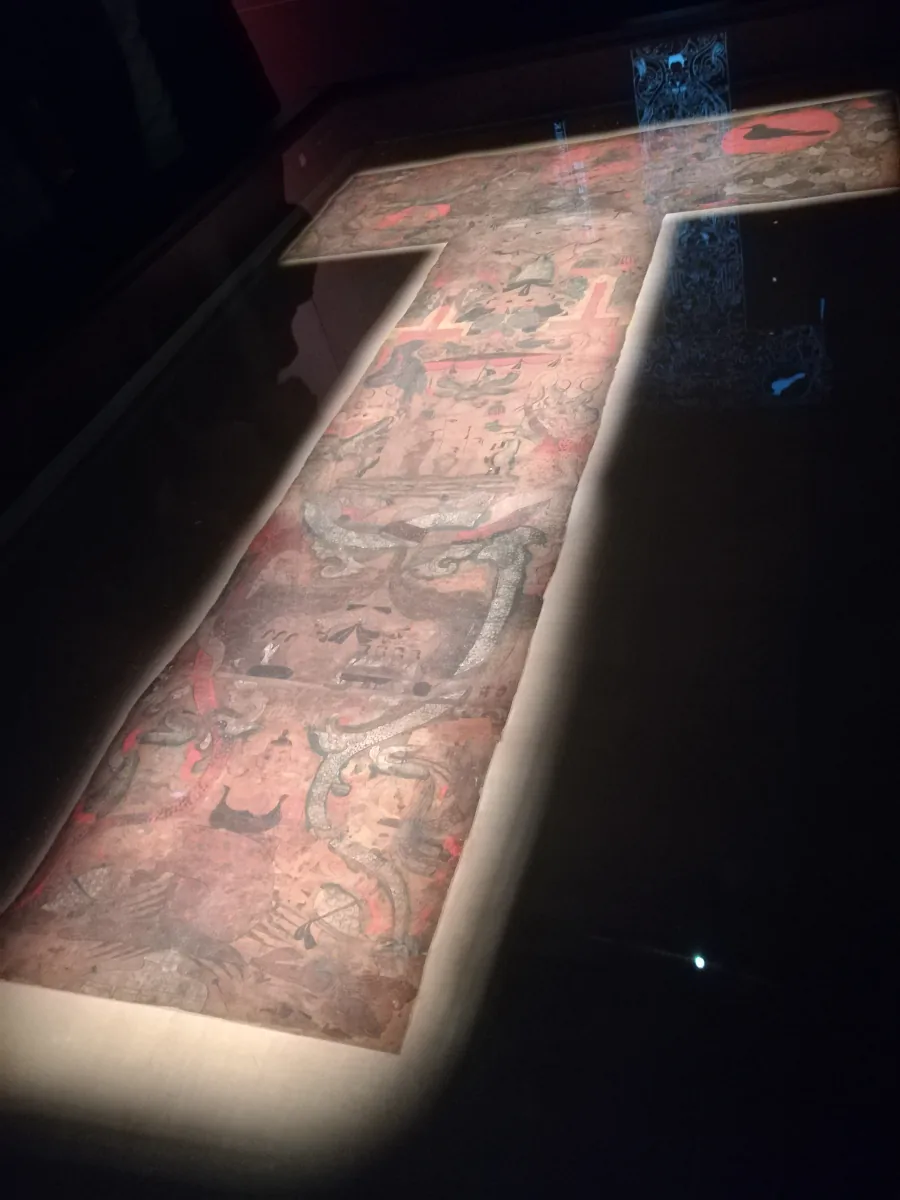
Three Han tombs near Changsha, excavated in 1973 and 1974. Tomb 3, sealed in 168 BCE, produced silk copies of the Daodejing older than any then known, medical and divinatory manuscripts, a text on living by breath instead of grain — and the Daoyin tu, a painted chart of forty-four exercise postures.
It is the single most important archaeological site for this subject: the point at which the practices stop being claims in later texts and become physical objects with a sealing date on them.